Tag Archives: Senate Budget Committee

US Senate moves toward Internet sales tax vote

The U.S. Senate has moved toward a vote to impose sales tax on most Internet purchases, with lawmakers likely to vote to close debate on legislation next week.

On Thursday, Senate Majority Leader Harry Reid, a Nevada Democrat, filed a cloture motion to end debate and move to a final vote on the Marketplace Fairness Act, which would allow states to collect sales tax on Internet sellers that have no presence within their borders.

The Senate is likely to pass the Internet sales tax once it comes to the floor. Twenty-eight of 100 senators are co-sponsors of the bill, and in late March, senators voted 75-24 for a nonbinding resolution to allow the Senate Budget Committee to include the sales tax in the U.S. budget.

Reid’s move would allow the bill to move forward on an expedited schedule by skipping hearings. Supporters of the Marketplace Fairness Act have been trying for years to get a bill passed in Congress.

To read this article in full or to leave a comment, please click here

From: http://www.pcworld.com/article/2035712/us-senate-moves-toward-internet-sales-tax-vote.html#tk.rss_all

Senate Passes Budget for the First Time in Four Years

By The Associated Press

Filed under: , ,

By ALAN FRAM

WASHINGTON (AP) – An exhausted Senate gave pre-dawn approval Saturday to a Democratic $3.7 trillion budget for next year that embraces nearly $1 trillion in tax increases over the coming decade but shelters domestic programs targeted for cuts by House Republicans.

While their victory was by a razor-thin 50-49, the vote let Democrats tout their priorities. Yet it doesn’t resolve the deep differences the two parties have over deficits and the size of government.

Joining all Republicans voting no were four Democrats who face re-election next year in potentially difficult races: Sens. Max Baucus of Montana, Mark Begich of Alaska, Kay Hagan of North Carolina and Mark Pryor of Arkansas. Sen. Frank Lautenberg, D-N.J., did not vote.

The vote came after lawmakers labored through the night on scores of symbolic amendments, ranging from voicing support for letting states collect taxes on Internet sales to expressing opposition to requiring photo ID‘s for voters.

The Senate’s budget would shrink annual federal shortfalls over the next decade to nearly $400 billion, raise unspecified taxes by $975 billion and cull modest savings from domestic programs.

In contrast, a rival budget approved by the GOP-run House balances the budget within 10 years without boosting taxes.

That blueprint- by House Budget Committee Chairman Paul Ryan, R-Wis., his party’s vice presidential candidate last year – claims $4 trillion more in savings over the period than Senate Democrats by digging deeply into Medicaid, food stamps and other safety net programs for the needy. It would also transform the Medicare health care program for seniors into a voucher-like system for future recipients.

“We have presented very different visions for how our country should work and who it should work for,” said Sen. Patty Murray, D-Wash., who chairs the Senate Budget Committee. “But I am hopeful that we can bridge this divide.”

A day that stretched roughly 20 hours featured brittle debate at times. The loudest moment came toward the end, when senators rose as one to cheer a handful of Senate pages – high school students – who lawmakers said had worked in the chamber since the morning’s opening gavel. Senators then left town for a two-week spring recess.

Congressional budgets are planning documents that leave actual changes in revenues and spending for later legislation, and this was the first the Democratic-run Senate has approved in four years. That lapse is testament to the political and mathematical contortions needed to write fiscal plans in an era of record-breaking deficits that until this year exceeded an eye-popping $1 trillion annually, and to the parties‘ profoundly conflicting views.

“I believe we’re in denial about the financial condition of our country,” Sen. Jeff Sessions of Alabama, top Republican on the Budget panel, said of Democratic efforts to boost spending on some programs. “Trust me, we’ve got to have some spending reductions.”

Though budget shortfalls …read more
Source: FULL ARTICLE at DailyFinance

Numbers Gap Between House, Senate Budgets Is Bridgeable. The Ideological Chasm Isn't.

By Howard Gleckman, Contributor

Think of the federal budget as an expression of government priorities described by numbers and words. This week, we’ve seen two widely divergent views of the federal role in people’s lives, one from the Republican-controlled House Budget Committee and the other from the Democratic-controlled Senate Budget Committee. …read more
Source: FULL ARTICLE at Forbes Latest

"Token Lefty" Knowingly Distorts Facts to Launch Most Dishonest Attack on Obamacare Critic to Date

By Chris Conover, Contributor

Faithful readers of Rick Ungar–the self-described “token lefty” in Forbes’ stable of contributors–may have read last week his provocative piece titled “GOP Senator Knowingly Distorts GAO Report He Commissioned To Launch Most Dishonest Attack On Obamacare To Date.” So now you know the “rest of the story” as it relates to how I titled today’s post. There appeared to be no holds barred in Mr. Ungar’s astonishing attack on Alabama Senator Jeff Sessions, the ranking minority member of the Senate Budget Committee (someone who you might have thought been deserving of a tad more respect than Mr. Ungar saw fit to accord). Indeed, by the time he was done, Mr. Ungar had concluded that Senator Sessions is unfit for public office! …read more
Source: FULL ARTICLE at Forbes Latest

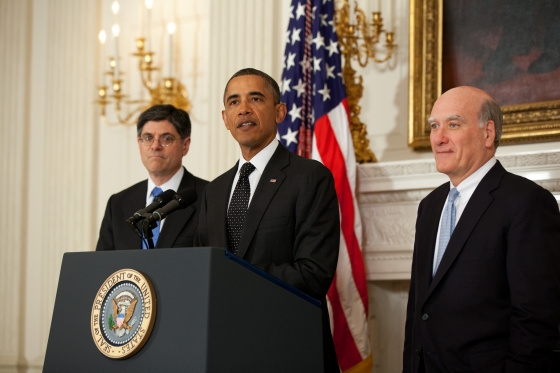
Opposition Grows As Jack Lew Proves He Doesn’t Understand Budgets

By Breaking News

Jack Lew SC Opposition Grows As Jack Lew Proves He Doesnt Understand Budgets

Jack Lew, President Obama’s choice to replace Timothy Geithner as Treasury Secretary, has been in Washington DC a long time. Anyone in public service that long will have quite a record of public statements that will paint an accurate picture for Senators who are considering his nomination. Last week, I wrote about some of the more outrageous statements Lew has made, and the lack of confidence some elected officials have shown in his ability to faithfully execute the cabinet position to which he has been nominated.

The drumbeat of doubt against Jack Lew is continuing to build. First it was Jeff Sessions, the top Republican on the Senate Budget Committee, who voiced strong opposition to Lew’s nomination. A day later, Senator Mike Lee (R-UT) released the following statement:

“As the country struggles with a painfully slow economic recovery, Washington needs leaders who are willing to support reforms that will put us on a sustainable fiscal path,” said Lee, a member of the Joint Economic Committee. “Unfortunately, the nomination of Jack Lew as Secretary of Treasury signals that the president will continue to pursue the same failed policies of the previous four years: higher taxes, more spending, and more debt. It virtually guarantees the president will not compromise on entitlement reform, and assures that the White House will fight to maintain the status quo of our deeply dysfunctional system. At a moment when the president could have shown a willingness to work with Republicans to fix the challenges that face the country, he has instead moved in a disappointing direction.”

Read More at freedomworks.org . By Jeff Reynolds.

Source: FULL ARTICLE at Western Journalism

Republican senator rips Obama Treasury pick over 'false' statement on debt

The top Republican lawmaker on the Senate Budget Committee fired a warning shot Thursday as President Obama prepared to tap Chief of Staff Jack Lew for treasury secretary, vowing to oppose the nomination over a “false” statement Lew made about the national debt.
Source: FULL ARTICLE at Fox Most Popular