Tag Archives: KERS

Rumormill: Toyota may return to F1 under Lexus banner

By Seyth Miersma

Filed under:

A new report in from the website Club Lexus claims to have insider knowledge about a return to Formula One racing by Toyota, this time under the auspices of the Lexus brand. Toyota competed in F1 from 2002 through the 2009 season. That final year saw the team return competitive, if inconsistent results, but the larger economic woes in the automotive market made a decision to pull the plug relatively easy at the time.

Now, citing recent interviews with Toyota executives and insider sources, Club Lexus says that the move to re-enter F1 for the 2014 season is “all but finalized.” The choice to go with the Lexus nameplate over Toyota makes some sense, too, considering the success that rival Infiniti has had in recent years through its partnership with Red Bull Racing. Further, the emerging Lexus identity as a performance car builder, with a strong background in hybrid vehicles, could help the F1 move resonate with buyers.

A few technological factors and formula changes within F1 offer some credence to the Lexus rumor, too. F1 will increase the available capacity of KERS from 60kW to 120kW, a change that theoretically benefits the hybrid-savvy Toyota. What’s more, 2014 will see a switch from the current 2.4-liter V8 engines to 1.6-liter turbocharged V6s. A Lexus team that goes racing in 2014 will be on a level playing field with the rest of the grid then, with all teams adjusting to and continuing to develop the new engines.

Toyota may return to F1 under Lexus banner originally appeared on Autoblog on Wed, 03 Apr 2013 08:43:00 EST. Please see our terms for use of feeds.

Permalink | Email this | Comments

…read more
Source: FULL ARTICLE at Autoblog

Renault Details Turbo V-6 Engine for 2014 Formula 1 Season

By Eric Tingwall

The 2013 Formula 1 season is just getting underway, but Renault already is preparing a new engine for 2014 when a fresh set of rules goes into effect. The new engine drops two cylinders, adopts a more powerful electric boost, and most interesting, adds a turbocharger connected to a second electric motor.

The heart of the powertrain is a 1.6-liter, 90-degree V-6 now using direct injection and making more than 600 horsepower. Engine revs are capped at 15,000 rpm (versus 18,000 rpm for the current batch of V-8s) and a single exhaust replaces the outgoing V-8’s dual-exhaust setup. The hybrid-like KERS system is back, but it’s been renamed ERS-K (for Energy Recovery System-Kinetic) and the electric motor is twice as powerful, with a peak output of 161 horsepower.

The real novelty, though, is the addition of a second electric motor/generator connected to the turbocharger turbine. Known as ERS-H (Energy Recovery System-Heat), this electric unit both captures energy and occasionally feeds it back to the turbocharger to keep the compressor on boost. Rather than vent excess exhaust through a wastegate, the hot gasses spin the turbine to drive the generator, which then sends electricity to the batteries or capacitors. That electricity can be used either to power the wheels via the ERS-K motor or to spin the turbocharger compressor. By driving the compressor during braking, Renault can eliminate turbo lag.


Of course, necessity is the mother of invention, and Renault’s new engine is as much a product of the Fédération Internationale de l’Automobile as it is the French automaker. The iron-clad Formula 1 rulebook means engine builders Ferrari, Mercedes, and Cosworth—rumors persist that Honda could make a return to F1 as an engine supplier next season—inevitably will run with power units that are dimensionally and conceptually identical to Renault’s.

The new engine represents a significant departure from the 2.4-liter, naturally aspirated V-8s that have been used in Formula 1 since 2006. The FIA says its goal was to bring Formula 1 technologies closer to those of production cars and the basic principles—reduced displacement, turbocharging, and increased electrification—are right in line with trends we’re seeing on showroom floors. And just like in production cars, these changes are being made in the name of efficiency. While fuel consumption is currently unregulated, cars will be limited to 37 gallons of fuel per race and a maximum flow rate of 220 pounds per hour in 2014. At the same time, the rules encourage greater use of the electrified KERS system. While the systems supply about six seconds of boost per lap for 2013, the new rules will allow the electric assist to be used for up to 34 seconds per lap.

…read more
Source: FULL ARTICLE at Car & Driver

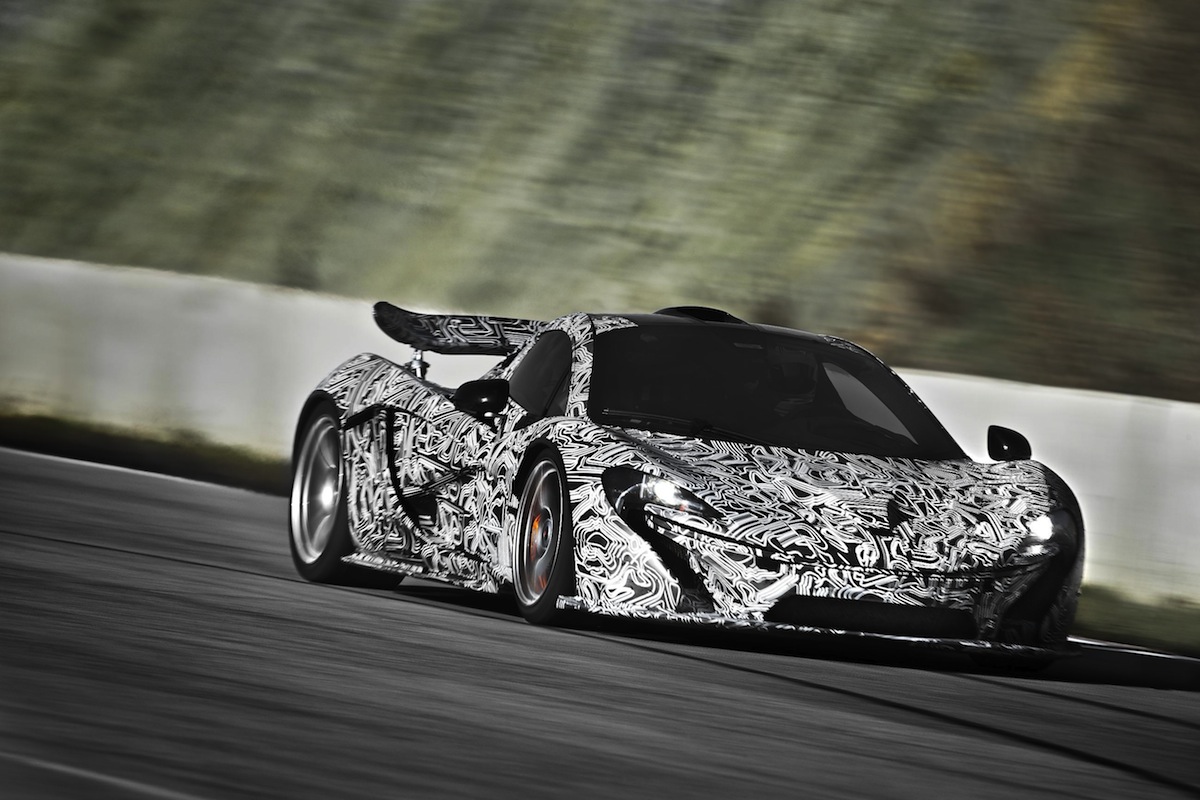
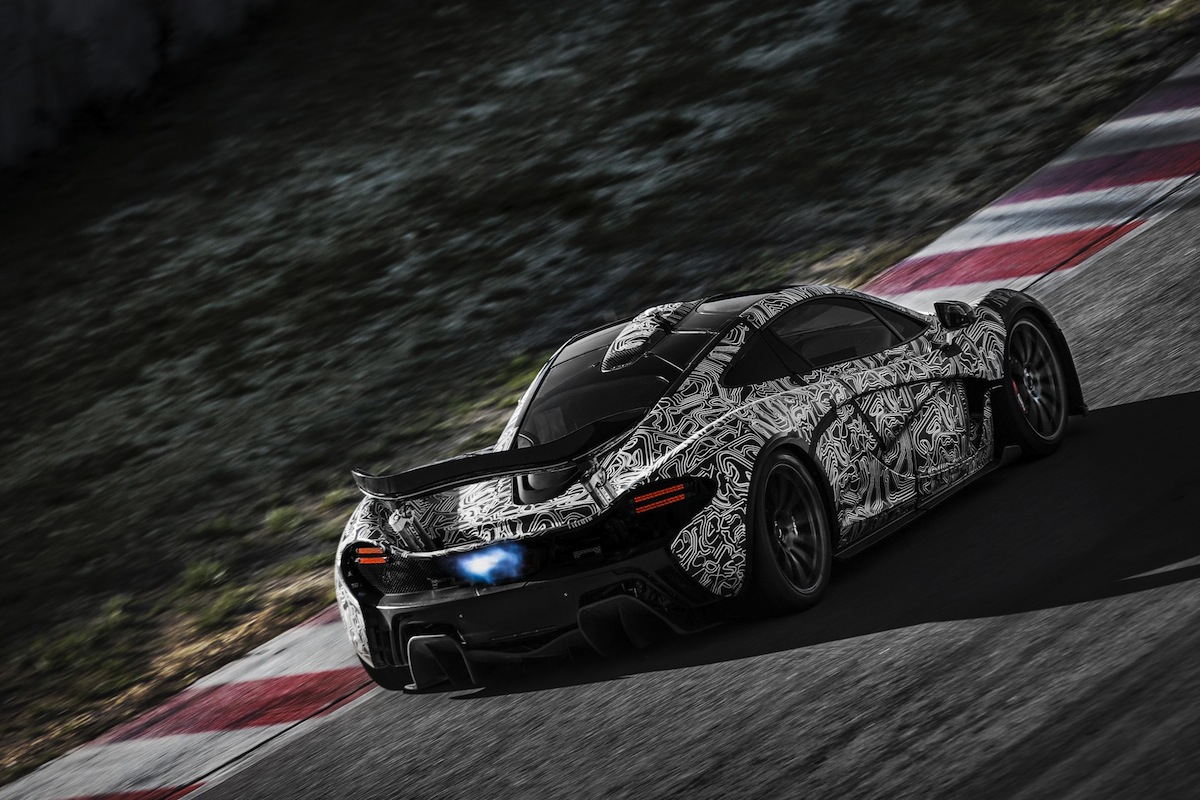
McLaren P1′s Twin Power System To Deliver 903 Horsepower

By Kurt Ernst

McLaren's P1 supercar - image: McLaren

McLaren’s P1 supercar – image: McLaren

So far, McLaren has been tight-lipped about the potential output of its new P1 supercar. Until now, all we’ve known for certain is that it will benefit from a supplemental Kinetic Energy Recovery System (KERS), meant to boost horsepower under acceleration. Technically, speaking, that makes the P1 a hybrid automobile, though that’s where the similarities between it and a Prius end.

McLaren's P1 supercar - image: McLaren

McLaren’s P1 supercar – image: McLaren

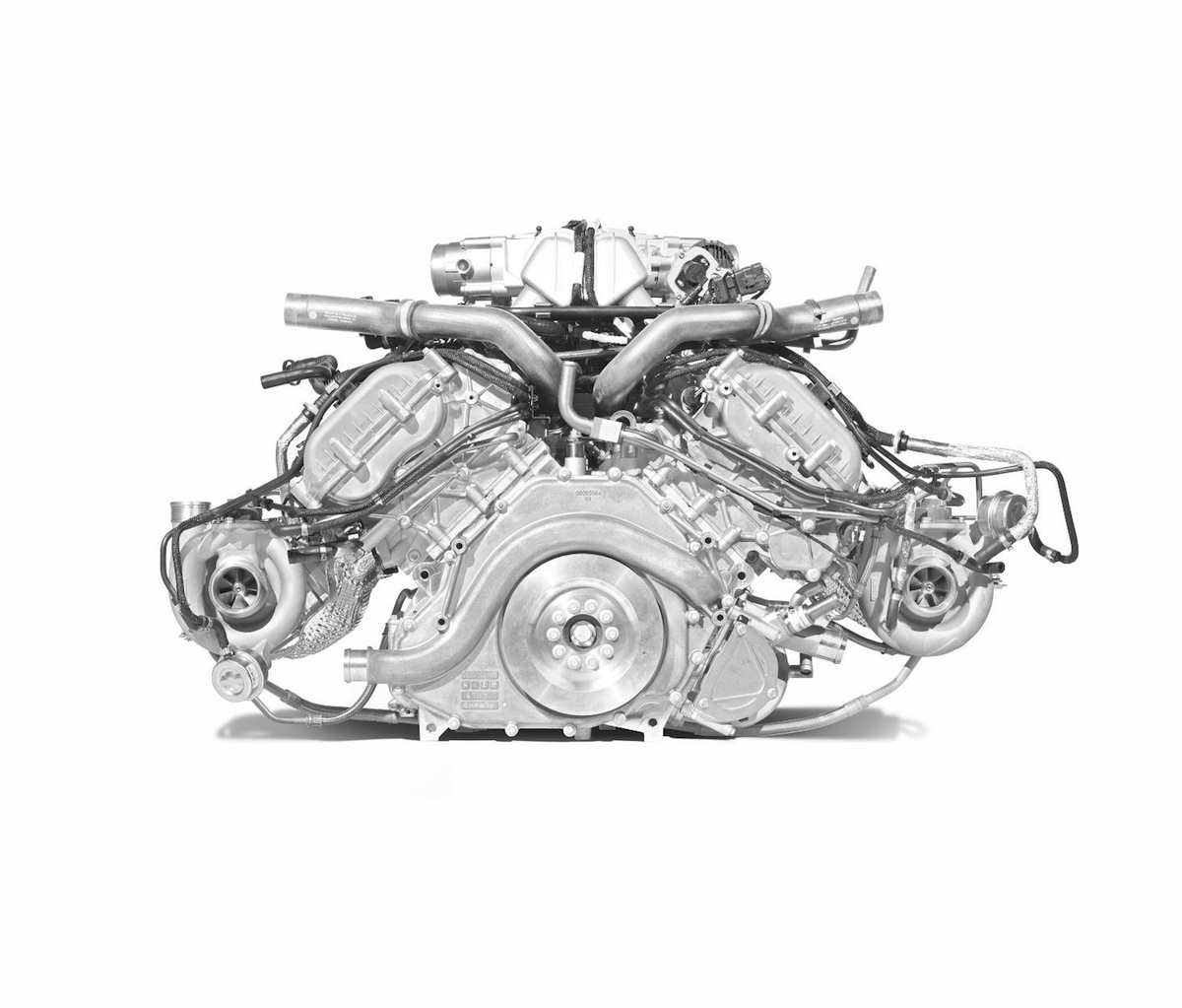
The P1’s twin-turbo 3.8-liter V-8 (borrowed from the McLaren MP4-12C) will make 727 horsepower on its own, with peak torque (531 pound-feet) available from 4,000 rpm. Boosting output is a McLaren Electronics-designed electric motor, rated at an additional 176 horsepower and 192 pound-feet of torque. Since electric motors make peak torque from 0 rpm, that’s power that can be used to get the P1 moving, quickly, from a standstill, and if you’re keeping score at home that produces a total output of 903 horsepower and 723 pound-feet of torque.

McLaren's P1 supercar - image: McLaren

McLaren’s P1 supercar – image: McLaren

Feeding the electric motor is a high-density battery pack that adds just 211 pounds to the car’s weight. To ensure maximum efficiency and cell life, the pack is liquid cooled, and it can be completely recharged (with a supplied plug-in charger) in only two hours. Once full, the pack supplies enough power in full electric mode for up to 10 kilometers (6.2 miles) of driving.

McLaren's P1 supercar - image: McLaren

McLaren’s P1 supercar – image: McLaren

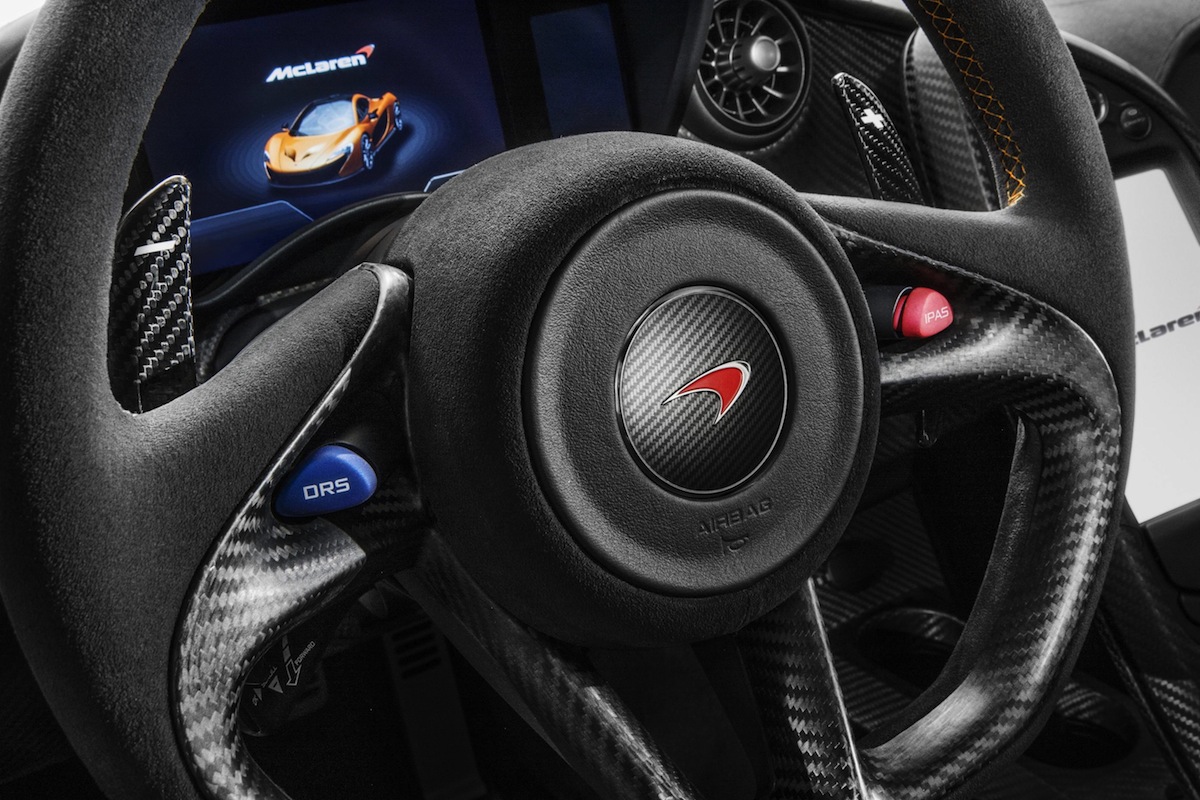
The real purpose of the hybrid system, however, is supplemental power. There’s an IPAS (Instant Power Assist System) button on the steering wheel, and pressing it instantly serves up the extra 176 horsepower and 192 pound-feet of torque the electric motor delivers. KERS isn’t the only Formula One technology employed by the P1, either; opposite the IPAS button on the P1’s steering wheel is a button labeled DRS, for Drag Reduction System.

McLaren's P1 supercar - image: McLaren

McLaren’s P1 supercar – image: McLaren

Like an F1 car, the P1 uses a movable rear wing to adjust downforce. While downforce adds grip in a corner, it also takes away speed in a straight line. Thumbing the DRS button will change the rear wing’s angle of attack, decreasing drag by as much as 23-percent. Release the button, or hit the brakes, and the rear wing takes a steeper angle, increasing drag and rear downforce.

Look for further details on the McLaren P1 to be revealed when the car breaks cover at the upcoming Geneva Motor Show.

…read more
Source: FULL ARTICLE at Automotive Addicts

Official: Marussia launches KERS-equipped MR02

By Jonathon Ramsey

Marussia MR02 F1 car for 2013 - front three-quarter view

Filed under:

This is the penultimate car launch of the 2013 season, the Marussia MR02. The fourth car built by the team that was known as Virgin in its first two Formula One seasons is said to be a “comprehensive evolution” of last year’s car. Produced under the eye of Pat Symonds, he of The Renault Affair at the Singapore Grand Prix in 2008, the chassis is a product of CFD and wind tunnel work through a technical partnership with McLaren, and its Cosworth engine is aided by a two-year-old Kinetic Energy Recovery System purchased from Williams. It’s the first time the team has used KERS on one of its cars.

Out back is a Coanda exhaust, otherwise there’s nothing exotic about a car just looking to score the team’s first Constructor’s points. With no major change in regulations, the car probably won’t have the usual early-season opportunities to take advantage of big-team misfortunes, but the MR01 was quite a reliable runner, so the addition of KERS could make the difference this year between one point and none among the backmarkers.

Continue reading Marussia launches KERS-equipped MR02

Marussia launches KERS-equipped MR02 originally appeared on Autoblog on Wed, 06 Feb 2013 17:29:00 EST. Please see our terms for use of feeds.

Permalink | Email this | Comments

…read more
Source: FULL ARTICLE at Autoblog

Official: Scuderia Ferrari F138 unveiled in Maranello

By Jonathon Ramsey

Filed under: , ,

This is the F138, the Formula One challenger that Ferrari CEO Luca de Montezemolo describes as “hopeful” and the eighth and final version of a Scuderia Ferrari Formula One car with a V8 engine – for now. The last digit in this car’s name pays homage to that cylinder count, while the first two digits represent the year; next year the regulations will mandate 1.6-liter turbocharged V6s.

The Scuderia did well in pre-season testing last year but at the first race found itself almost two seconds down on the other top teams. With no significant changes to the regulations for 2013, Ferrari focused on weight loss, making components smaller and making the package more rigid, refining every aspect of a car that’s essentially an evolution of last year’s F2012. The front suspension has been redesigned for aero benefit, and the rear suspension is completely new. The front and rear wings are evolutions, and there’s a new air intake design above the cockpit and redesigned intakes on the sidepods. The rear bodywork forms a much narrower package around the redesigned exhaust system, and the KERS is smaller and lighter.

Getting a jump on the 2014 car that will be a clean-sheet design under the new technical regime, Ferrari has integrated the spec TAG 320 electronic controller unit to this year’s car. Forbidden from raising the power performance of the engine, the F1 team has worked on maintaining that performance over the three-race life of the engine. And yes, that’s a vanity panel over the stepped nose in front.

Ferrari’s 12-year-old wind tunnel needs modernizing, so it’s doing all of the aero work for the F138 at the Toyota wind tunnel in Cologne, Germany. There are already updates planned for each of the three pre-season test sessions and the first race in Melbourne, so the F138 pictured here is predicted to look “quite different” than the one on the first grid of the season.

Scuderia Ferrari F138 unveiled in Maranello originally appeared on Autoblog on Fri, 01 Feb 2013 15:59:00 EST. Please see our terms for use of feeds.

Permalink | Email this | Comments

Source: FULL ARTICLE at Autoblog
Report: Possible Ferrari F70/F150 specs emerge from private showings

By Jeffrey N. Ross

Filed under: , ,

At a private showing in Maranello, a group of lucky souls got to sneak a peek at the upcoming successor to the Ferrari Enzo, which has been referred to as both the F70 and F150 (not that F-150). While we still don’t get any name confirmation or a definitive idea (aside from spy shots) as to what the newest Ferrari supercar will look like, one of the attendees did manage to pass along some vital performance information about the car as well as production numbers that are said to be limited to just 499 units.

The report on Auto-Blog.com.mx confirms that the Enzo successor will utilize an 800-horsepower V12 paired with a hybrid KERS good for another 150 hp. The engine’s peak power kicks in at a screaming 9,200 rpm, while peak torque (not divulged) will be available at just 1,000 rpm. That kind of power could be great in just about anything, but the report also says that this new Ferrari model will have a dry weight of just 2,799 pounds (about the same as the Scion BRZ and Scion FR-S twins and just slightly more than a Mazda MX-5 Miata). Rumored speed times include a top speed of 229 miles per hour, and the ability to run from 0-60 mph in less than three seconds; doubling that speed takes an extra second.

We’ve already seen the car’s carbon fiber chassis and now we’re just waiting to see the production car in real life, but Ferrari has not announced when the car will be introduced.

Possible Ferrari F70/F150 specs emerge from private showings originally appeared on Autoblog on Fri, 01 Feb 2013 10:44:00 EST. Please see our terms for use of feeds.

Permalink | Email this | Comments

Source: FULL ARTICLE at Autoblog
Details of Ferrari F150 Supercar Slip Out of Private Event

By Alexander Stoklosa

Ferrari Enzo Replacement (spy photo)

The long, slow march of Ferrari’s Enzo successor from drawings on the pages of designer’s sketchbooks to landing in real-life customers’ garages has been a sadist’s dream. Fans have been given peeks at the car’s engine bay, HY-KERS V-12 hybrid powertrain, carbon-fiber chassis tub, and spy photos of cobbled-together mules trundling around Europe—but not a single image of the super-est supercar has made its way online (well, save for these blurry, shadowy teaser photos). And now to pique your interest just a bit further, FerrariChat‘s forums are alight with chatter over new details that allegedly were revealed at a private preview event for the new sports car. 

Although the new Ferrari remains nameless—internally, it’s been codenamed F150—the car’s other specifics have been finalized, if the info coming out of the private event is to be believed. According to one forum member whose pal attended the event, just 499 F150s will be produced; there will be just three available paint colors, and the car’s seats will be fixed. (This makes sense, given that the carbon-fiber chassis tub Ferrari showed off at last year’s Paris auto show featured two scalloped seat-like indents molded into it.) To fit drivers of different sizes, the pedals will be adjustable, and we assume the steering column would be, as well.


The supercar’s hybrid V-12 powertrain will pack one helluva punch, with the internal-combustion engine producing 800 horsepower and the KERS electric-boost system providing an additional 150 ponies. Combined with a claimed curb weight of just over 2800 pounds, it’s expected the F150 will be good for a three-second 0–62-mph run. The car will supposedly hit 124 mph in seven seconds on its way to a 230-mph top speed. That’s not enough to unseat Bugatti’s Veyron from the fastest production car throne, but we understand it will make the F150 the fastest street-legal Ferrari to ever lap its Fiorano test track.

Given that private events are being held—presumably to stir interest among potential customers—we’re betting that the Enzo successor could be revealed fairly soon. The Geneva show is coming up, but Ferrari could also decide to debut the car in private, too.

Source: FULL ARTICLE at Car & Driver