Tag Archives: Drag Reduction System

Official: McLaren P1 to get 903 HP from "Twin Power" hybrid

By Zach Bowman

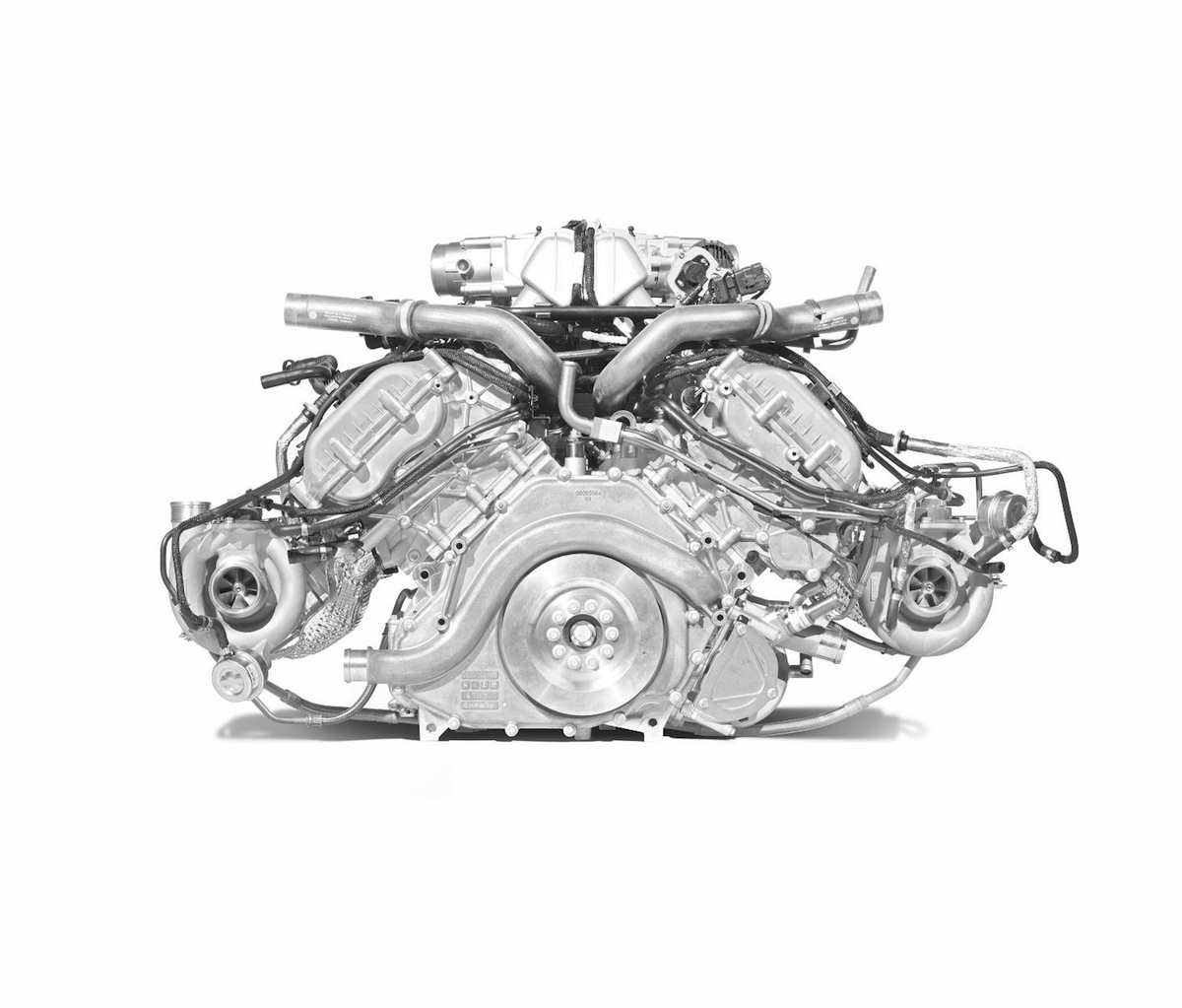
McLaren P1 Hybrid Drivetrain cutaway image

Filed under:

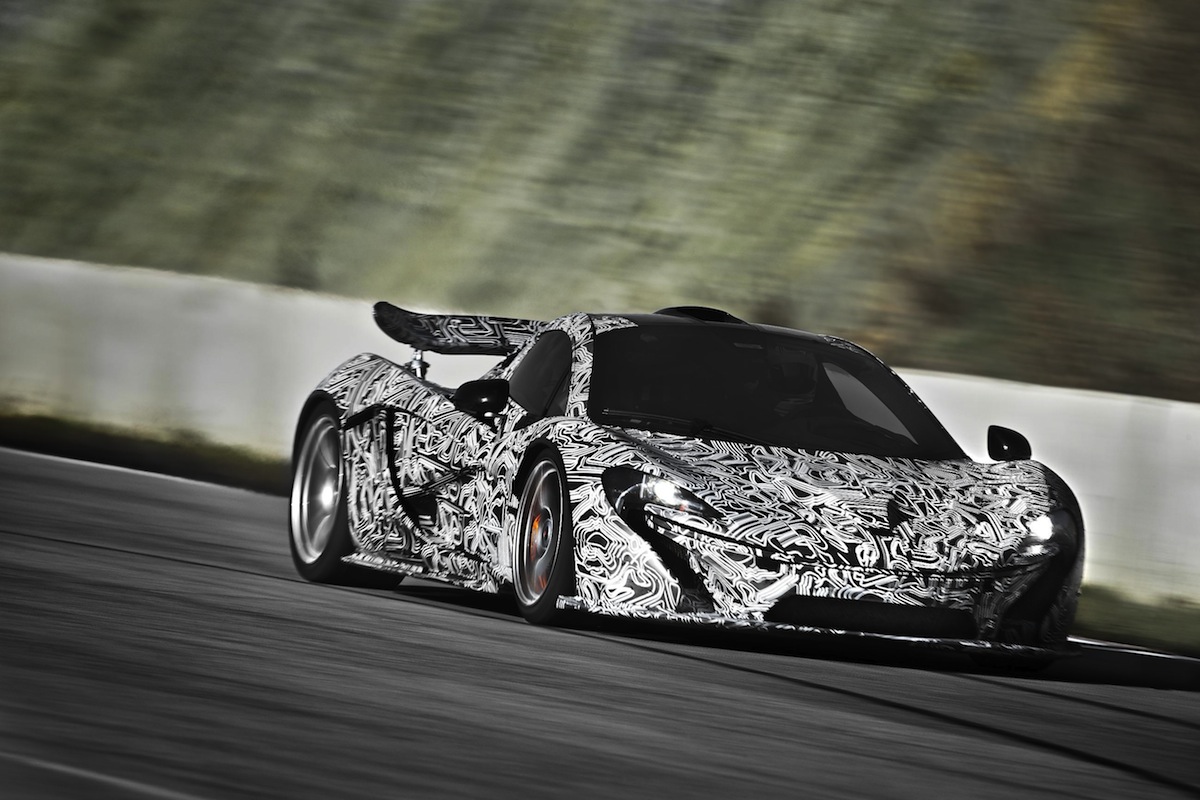
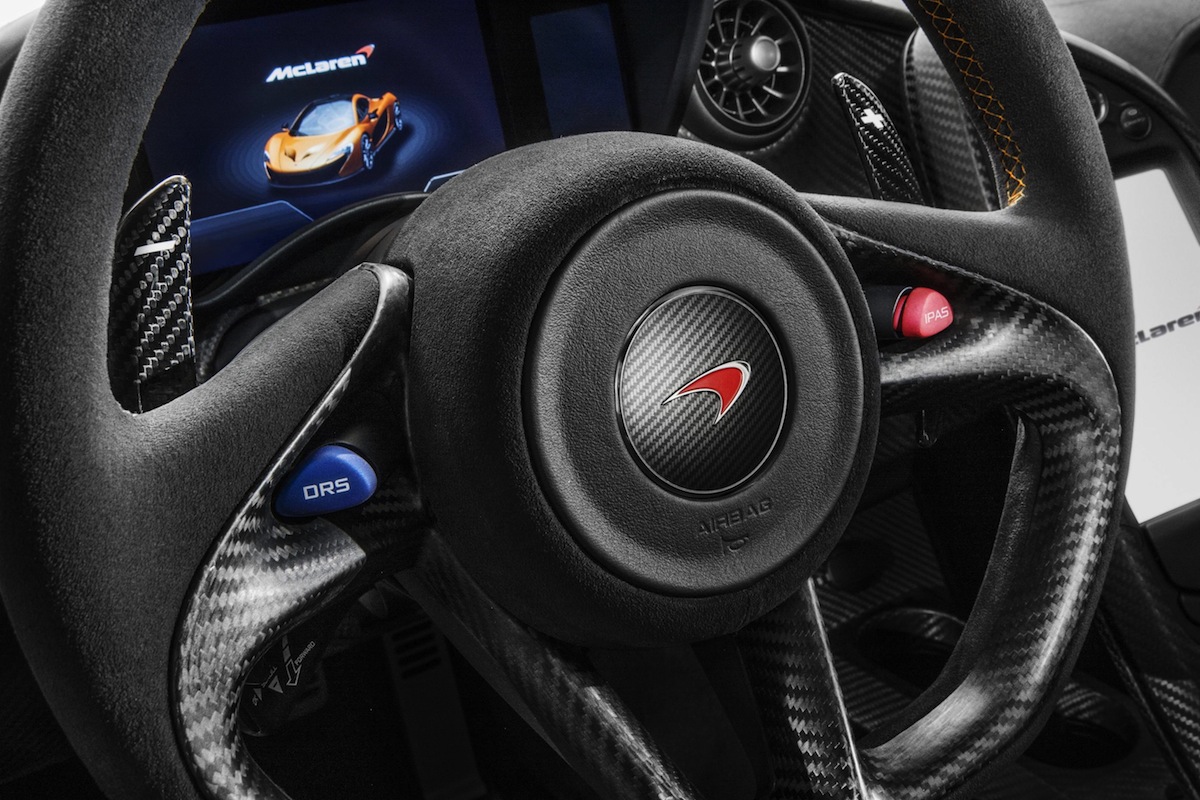
McLaren has dropped official power figures for the company’s upcoming P1. The new hypercar will come packing 903 horsepower and 663 pound-feet of torque from the combination of a 3.8-liter, twin-turbocharged V8 engine and an electric motor. That’s right: this sucker is a hybrid. The internal combustion engine features a few tweaks to improve cooling, and McLaren says the block uses a special casting to incorporate the motor. As a result, the P1 features a boost system that can serve up an instantaneous 176.5 horsepower dumped straight to the seven-speed dual clutch transmission. The driver can summon up that grunt on command by pressing the steering-wheel-mounted Instant Power Assist System button.

What’s more, McLaren has figured out a way to use the electric motor to improve shift times. The P1 applies instant negative torque with each shift, dropping engine speed quickly and precisely for the upshift. Engineers have also incorporated additional technology from the company’s Formula One efforts, including a Drag Reduction System. Push a button on the steering wheel and the rear wing shifts to reduce drag by 23 percent, providing the sensation of a boost in power. Check out the full press release below for more information on what is shaping up to be an incredible piece of technology.

Continue reading McLaren P1 to get 903 HP from “Twin Power” hybrid

McLaren P1 to get 903 HP from “Twin Power” hybrid originally appeared on Autoblog on Wed, 20 Feb 2013 10:44:00 EST. Please see our terms for use of feeds.

Permalink | Email this | Comments

…read more
Source: FULL ARTICLE at Autoblog

McLaren P1′s Twin Power System To Deliver 903 Horsepower

By Kurt Ernst

McLaren's P1 supercar - image: McLaren

McLaren’s P1 supercar – image: McLaren

So far, McLaren has been tight-lipped about the potential output of its new P1 supercar. Until now, all we’ve known for certain is that it will benefit from a supplemental Kinetic Energy Recovery System (KERS), meant to boost horsepower under acceleration. Technically, speaking, that makes the P1 a hybrid automobile, though that’s where the similarities between it and a Prius end.

McLaren's P1 supercar - image: McLaren

McLaren’s P1 supercar – image: McLaren

The P1’s twin-turbo 3.8-liter V-8 (borrowed from the McLaren MP4-12C) will make 727 horsepower on its own, with peak torque (531 pound-feet) available from 4,000 rpm. Boosting output is a McLaren Electronics-designed electric motor, rated at an additional 176 horsepower and 192 pound-feet of torque. Since electric motors make peak torque from 0 rpm, that’s power that can be used to get the P1 moving, quickly, from a standstill, and if you’re keeping score at home that produces a total output of 903 horsepower and 723 pound-feet of torque.

McLaren's P1 supercar - image: McLaren

McLaren’s P1 supercar – image: McLaren

Feeding the electric motor is a high-density battery pack that adds just 211 pounds to the car’s weight. To ensure maximum efficiency and cell life, the pack is liquid cooled, and it can be completely recharged (with a supplied plug-in charger) in only two hours. Once full, the pack supplies enough power in full electric mode for up to 10 kilometers (6.2 miles) of driving.

McLaren's P1 supercar - image: McLaren

McLaren’s P1 supercar – image: McLaren

The real purpose of the hybrid system, however, is supplemental power. There’s an IPAS (Instant Power Assist System) button on the steering wheel, and pressing it instantly serves up the extra 176 horsepower and 192 pound-feet of torque the electric motor delivers. KERS isn’t the only Formula One technology employed by the P1, either; opposite the IPAS button on the P1’s steering wheel is a button labeled DRS, for Drag Reduction System.

McLaren's P1 supercar - image: McLaren

McLaren’s P1 supercar – image: McLaren

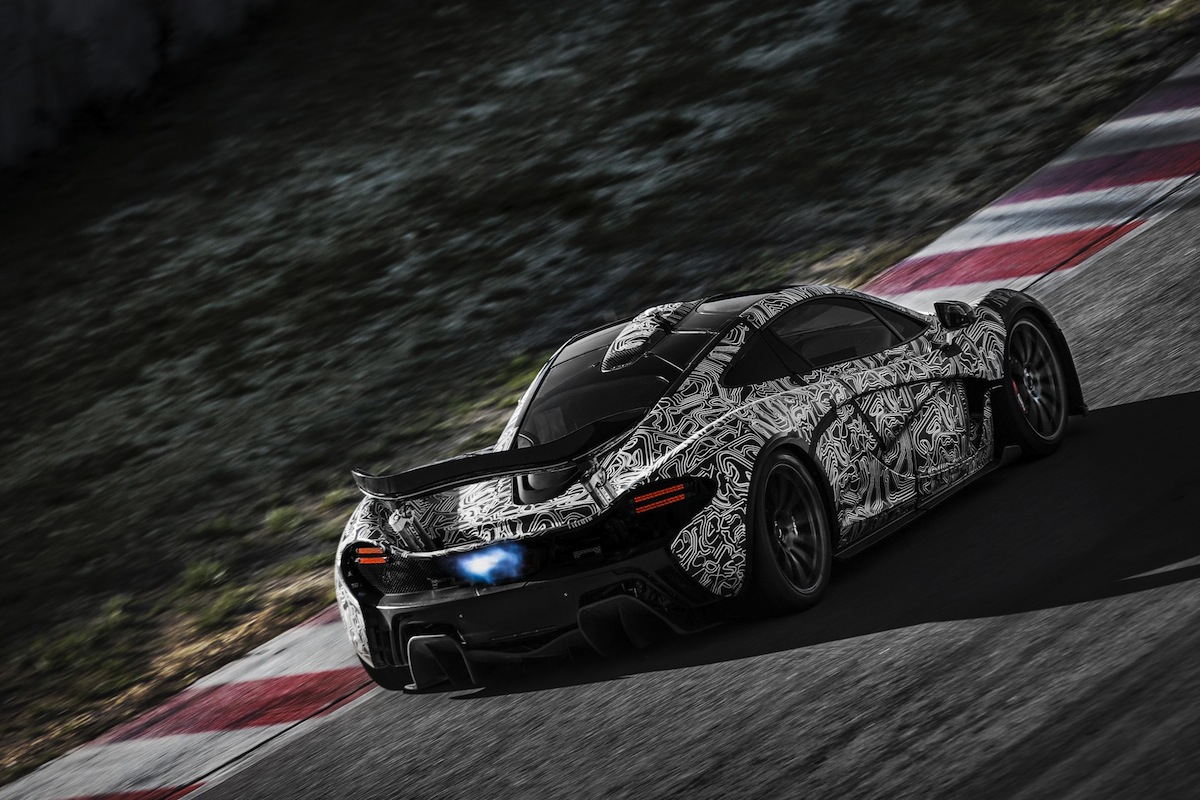
Like an F1 car, the P1 uses a movable rear wing to adjust downforce. While downforce adds grip in a corner, it also takes away speed in a straight line. Thumbing the DRS button will change the rear wing’s angle of attack, decreasing drag by as much as 23-percent. Release the button, or hit the brakes, and the rear wing takes a steeper angle, increasing drag and rear downforce.

Look for further details on the McLaren P1 to be revealed when the car breaks cover at the upcoming Geneva Motor Show.

…read more
Source: FULL ARTICLE at Automotive Addicts