I’ve heard Will Stephenson, Klaas Freitag and Frank Karlitschek talk about a lighter and/or easier KDE based desktop forever. And while I shared the ambition, implementing it is always easier said than done.
So when Will asked me to join his
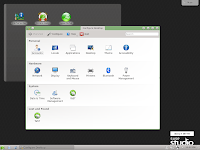
Systemsettings exposes about 80 different modules to the user. Some of these you’ll (almost) never use. And many which, from an user point of view, belong in one place (like theming) are split over several categories due to technical implementation details. It is noticeable that this was designed from the technology up, not from the user requirements down. I spend a big part of my hackweek figuring out how these categories are populated and the modules are shown, then creating an alternative tree with only about 35 modules. Will made a patch to allow systemsettings to either show the basic or the full set of KCM‘s.
This is an example of what we mean by simple, although we’re not done yet. Ideally, these and other improvements will go upstream and we intend to put work into that.
Note that this simplification, in no way, can be scientific. Of course 30 KCM modules is more ‘simple’ than 80 but it is very much a matter of taste to decide which ones need to be there and which ones don’t. That’s why we want to put effort in having our cake and eating it too: creating a proper theming KCM might allow us to get rid of a whole raft of theming-related KCM‘s, for example. Yup, we’re still KDE people… But in other places, we are willing to make hard choices based on common sense, research and simply our taste. Unless a designer can convince us he/she Is Right™ we reserve the right to make bad decisions.
Feedback?
We’re open for feedback and would love to hear input. Please remember that we’re trying to get stuff done so if you have input, put in the effort to make it useful. Have mockups, refer to what others do or scientific facts. Remember that we are not trying to create a desktop for experienced computer users and tinkerers: they can easily morph the normal Plasma Desktop into what they want. It’s what I do myself, its what the vast majority of people who read this do.
Instead we aim for a wide cross-section of people who don’t want to put in the cognitive effort to understand abstract stuff like virtual desktops or activities. If you understand and use these things to be more productive (which I do myself, by the way), you’re not our target audience.
If you want to help out, join the #opensuse-kde channel on freenode and check out our trello board.
Enough talk
Enough talk? Wanna try it? Yeah, it ain’t perfect yet, but I’ve created an initial Studio image and published it in the Gallery. It can be installed, if you insist, but this is a beginning of a
From: http://blog.jospoortvliet.com/2013/04/klyde-coolness-update.html


