After months of teasers and years of testing, BMW showed off the i3 today, its first electric vehicle designed to go into full production. The odd-looking hatchback offers some of the “green cred” of Toyota’s Prius, combined with a promise of BMW-like driving that should please those who don’t want to give up much performance to get there. But because BMW also offers an option of a small gasoline engine to extend the car’s range up to 160+ miles, the i3 ends up encroaching on the territory of both the Chevrolet Volt and even some of the ground is seeking to conquer. …read more
Ahead of its simultaneous triple debut on three continents, BMW announced pricing for the first electric vehicle from its i sub-brand: the new i3 starts at $42,275 before any EV tax incentives. BMW expects an all-electric range of 80 to 100 miles for the lightweight, four-passenger hatchback, or 160 to 180 miles with an optional 2-cylinder gasoline engine.
Pricing tops other small EVs by a significant margin. The i3 is about $5000 more than its next-highest-priced competitor, the lease-only Honda Fit EV, and more than $12,000 pricier than the Nissan Leaf. But it’s also the only premium brand in that group; the much larger Tesla Model S starts at $71,070.
While the i3’s pricing demonstrates some confidence on BMW’s part for the U.S. market, the brand stumps observers by offering the i3 at a surprisingly low 29,370 euros before tax in Germany. That puts it on par with an uplevel Nissan Leaf. And it is an unusual pricing strategy, as BMW models are typically more expensive on their home turf than here in the U.S. It confirms what we’ve heard: Within BMW, there is considerable concern about the i3′s sales performance in Germany and Europe.
The i3 is unique in its design, with a three-plus-two-door arrangement that requires the front doors to be open before accessing the back seat through smaller, rear-hinged doors. Aluminum and carbon-fiber construction contribute to a svelte (for an EV) curb weight of 2630 pounds, according to BMW. A 170-hp electric motor is mounted just ahead of the rear axle and drives the rear wheels. The 22-kWh lithium-ion battery pack, resting under the passenger compartment, provides energy. An optional, range-extending 650-cc gasoline engine can be fitted adjacent to the electric motor and does not compromise cargo space.
Driving dynamics are unique, too, not only among BMWs but even among electric cars. In normal traffic, the i3 can be controlled with only the right pedal. Lifting off the pedal induces a coasting mode; back off farther and regenerative braking kicks in.
When it arrives in the second quarter of 2014, the i3 will give drivers that want a premium nameplate and zero tailpipe emissions a more affordable choice than the Tesla Model S. And with an extended-range gas option, the BMW also offers a premium-brand alternative to the Chevrolet Volt. While it may not convert performance-minded 3-series owners to EVs, the i3 could attract others that aspire to go electric—and can afford it—to choose BMW.
Ford is lowering the price of its all-electric version of the Focus, cutting the price by $4000 to $35,995. The reduction is further evidence of a price war in the EV market, following the announcement of lower pricing and/or special lease rates for electrics such as the Nissan Leaf, Honda Fit EV, and Fiat 500E, as well as the plug-in hybrid Chevrolet Volt. Ford says the move is intended to make the electric Focus, which is available nationwide, more appealing to customers considering a plug-in vehicle.
The Nissan Leaf is still the most affordable of the aforementioned models, with a starting price of $29,650. It’s also among the most efficient, rated at 115 MPGe in combined city/highway driving. Range for the all-electric Nissan, though, is the lowest in this group at 75 miles. The Focus Electric, by comparison, ekes out one more mile of range despite a lower combined efficiency rating of 105 MPGe.
The $32,600 Fiat 500E is available only in California. The 500E can travel 87 miles on electricity alone and is rated at 116 MPGe combined. The Honda Fit EV, meanwhile, is rated at 118 MPGe combined and has a driving range of 82 miles. It’s priced at $37,415, although it is offered as a lease only. Currently, the Fit EV is available in California, Oregon, New York, New Jersey, Massachusetts, Maryland, Rhode Island, and Connecticut.
The Focus Electric now matches the price of the plug-in hybrid Chevrolet Volt, which is available at $35,995 for cash buyers and $36,995 if it’s leased or financed through Ally Financial or Wells Fargo. And although the Volt relieves so-called range anxiety by backing up its battery power with a gas engine, it has a limited electric-only range of 38 miles. On battery power alone, the Volt is rated at 98 MPGe combined; once the gas engine takes over, combined fuel economy is 37 mpg. Chevy recently added the all-electric Spark EV to its lineup, but smaller and priced at $27,495, The Spark EV is not a direct competitor to the Focus Electric. The Spark EV’s availability remains limited to Oregon and California.
With EVs commanding less than 1 percent of U.S. market share, automakers are anxious to incentivize sales. Ford addresses some of the driving public’s reluctance to go electric with this price drop, and, as with all EVs, the Focus Electric’s price can potentially be even lower when eligible buyers take advantage of any federal, state, and local tax credits and incentives that are available to them. Concerns about range and long-term reliability, however, still remain considerable obstacles for many would-be EV drivers.
TROY, Michigan — For nearly two years, a team of former Chevrolet Volt and Toyota Priusengineers has been working on the next big thing in electric cars: the latest version of the 154-year-old lead-acid battery.
Their aim is to build a battery strong enough to power a wider range of vehicles, something they think the current cutting-edge technology — lithium ion — can’t do cheaply, particularly given recent safety scares.
The focus of Energy Power Systems on a technology older than the automobile itself illustrates the difficulty with lithium-ion batteries. While widely used in everything from laptops to electric cars and satellites, a number of high-profile incidents involving smoke and fire have been a reminder of the risks and given them an image problem.
The overheating of the batteries on two of Boeing’s high-tech 787 Dreamliners, which prompted regulators to ground the aircraft, served to underline the concerns and forced the plane maker to redesign the battery system. Indeed, a growing number of engineers now say the lithium-ion battery revolution has stalled, undercut by high costs, technical complexity and safety concerns.
“Smart people have been working on this for 10 years already and no one is close to a new kind of battery,” said Fred Schlachter, a lithium-ion battery expert and retired physicist from the U.S.-funded Lawrence Berkeley National Laboratory.
Many experts now believe it will take at least another decade for lithium-ion technology to be ready for widespread adoption in transportation. Others, including Toyota Motor Corp. (TM), believe the solution lies beyond lithium-ion.
Interviews with two dozen battery executives, experts and researchers, including the founder of Securaplane, which made Boeing’s battery charger, reveal an industry in which some are having second thoughts about using lithium-ion, and are instead looking to enhance previous technologies or to leap ahead.
These people say expectations were set too high, too fast. People projected that “clean technology” batteries would shrink in size and weight at the speed of the microchip revolution. That hasn’t happened, and Schlachter says it won’t any time soon. “We’re not going to see a different chemistry, unless we’re very lucky, for decades.”
Just as recent developments in technology have allowed cars to improve their mileage using traditional engines, the lead-acid battery research is aiming for improved power in a smaller package.
Beyond Lithium-Ion
Lithium-ion supporters, including Boeing Co. (BA), Tesla Motors Co. (TSLA) and General Motors Co. (GM), maker of the Volt, say they can make the batteries safe, and problems with new technologies are to be expected.
GM overcame an early problem when a Volt caught fire during tests run by the U.S. National Highway Transportation Safety Administration, for instance, and after all,
Another green-car dream appears to be biting the dust. Fisker Automotive said this week that it will lay off 75% of its workforce, as the maker of the hybrid Karma luxury sedan appears to be running out of cash.
In recent months, Fisker had been seeking a major automaker to partner with in an effort to fund continued operations. But after talks with a Chinese automaker collapsed in March, it became clear that Fisker was running short of options.
A promising debut, followed by a streak of challenges Fisker, based in Anaheim, Calif., drew global headlines when it launched the Karma, one of the first “plug-in” hybrids, way back in 2008. The sedan drew raves for its sharp styling, created by company founder Henrik Fisker, who had previously worked as a designer for BMW and Aston Martin.
The Karma also helped launch the idea of a luxury “green” car segment, a market that several global automakers — as well as another California green-car start-up, Tesla Motors — have since entered.
But that was arguably the high point in the company’s history. Years of delays in getting the car certified for U.S. sale — a complex and expensive process that has undone many prior auto start-ups — meant that Fisker didn’t actually start delivering Karmas to customers until late 2011.
Production cars lead to even more troubles for Fisker But even then, things didn’t go well. A Texas house fire in early 2012 was blamed on a malfunctioning Karma, which fueled concerns about electric-car batteries that had arisen after a crash-tested Chevrolet Volt had caught fire the year before.
By then, it was too late. Fisker had run through much of its capital, including $193 million in loans from the U.S. government. No more loans were likely, as the feds had halted further financing in 2011 after Fisker had failed to meet a series of milestones.
Its only hope was to seek a partner, but after talks with China’s Dongfeng Motor Group collapsed last month, hopes faded.
The upshot: Tesla notwithstanding, sarting a car business is really, really hard Fisker’s experience points to just how hard it is to launch a new automaker from scratch. While Tesla Motors is on the verge of a profitable quarter, thanks to near-flawless execution on an audacious business plan, Tesla is really the exception that proves the rule.
The last automaker to be started from scratch and become an enduring presence on the global stage before Tesla was tiny supercar maker Lamborghini, way back in …read more
If you had suggested just five years ago that we could have a Cadillac powered by a three-cylinder engine, you’d have been locked away in a loony bin. They’d have made you eat the key. Yet according to a report by Edmunds, that’s what could be on the horizon for Cadillac and Chevrolet. The report says that while the plan has yet to be approved, General Motors is considering the use of three-cylinders as part of its plan to reduce vehicle weight and fuel consumption.
As they stand, the Chevrolet Volt and the Cadillac ELR plug-in hybrids are powered by a, 84-hp, 1.4-liter four-cylinder working in conjunction with a 149-hp electric motor. If the source of the Edmunds report is correct, that four-banger would be replaced by a 1.0- or 1.2-liter inline-three. About 18 months ago, GM announced it would be working with its Chinese partners to develop a new generation of three- and four-cylinder engines, which likely would be the source for the new Volt and ELR combustion engines. The Volt likely would be the first recipient of the triple with a refresh expected for 2015, while the ELR would follow suit a year later.
Just last week, GM CEO Dan Akerson spoke of the need to reduce vehicle mass, saying, “A good rule of thumb is that a 10-percent reduction in curb weight will reduce fuel consumption by about 6.5 percent. Our target is to reduce weight by up to 15 percent.” Last November, the man at Ford with the company’s longest title—executive vice president of global marketing, sales and service, and Lincoln—Jim Farley, told us, “Probably the most exciting fuel economy technology we never talk about is ‘lightweighting.’” It just so happens that Ford’s been hard at work on a three-cylinder of its own, which we’ve sampled in a European-market Focus and in the 2014 Fiesta, which will go on sale later this year.
The recent Geneva Motor Show was a festival of hypercars, with the presence of not one, but three over-the-top debuts: the Lamborghini Veneno, McLaren P1 and Ferrari LeFerrari. The latter two have hitched their carbon fiber bumpers to the electrification bandwagon by using hybrid-electric powertrains not entirely unlike the propulsion systems we’ve come to know in cars like the Toyota Prius and Chevrolet Volt. Does that mean the flow of electrons up the four-wheeled food chain will eventually consume our hallowed supercars? Not if AMG has anything to say about it.
AMG Director of Vehicle Development Tobias Moers recently confirmed that not only will there be a successor to the Mercedes-Benz performance division’s SLS AMG, he notes that its internal combustion engine will most definitely not be sharing living quarters with an electric drivetrain. Instead, AMG plans to focus on further pushing the power and efficiency envelope of the internal combustion engine and advancing the use of lightweight materials to achieve their goals. The first example of this effort can be seen in the new SLS AMG Black Series that incorporates many weight-saving techniques to shed some 154 pounds from the SLS AMG GT (above), which itself is lighter than the standard SLSAMG.
Furthermore, Moers remarks that his company is happy to leave the hypercar segment to companies like Ferrari and McLaren. He admits that, “Ferrari in the hyper-car segment is still a different brand than AMG. We have to be honest…” So rather than taking the SLS further upmarket to do battle with bulls and stallions, Moers hinted that the next-generation SLS may be joined by another performance model that fits neatly between itself and the C63 AMG.
The last time we talked to Henrik Fisker, he was a non-stop stream of optimism about the company he cofounded to build luxury plug-in hybrid automobiles. This, despite a ton of negative developments for the company in 2012. His outlook has taken a turn, apparently, since Fisker has reportedly resigned from the company that bears his name. No detailed reasons were given, but in a statement sent to Autocar, the official word is:
Effective as of Wednesday 13 March 2013, Henrik Fisker has resigned from Fisker Automotive as executive chairman, and has left the company. The main reasons for his resignation are several major disagreements that Henrik Fisker has with the Fisker Automotive executive management on the business strategy.
The last major executive shakeup at Fisker happened last August, when Tony Posawatz shifted away from the Chevrolet Volt team to become Fisker’s CEO. We have asked Fisker for comment and clarification, but have not yet heard back. What this all means for the future of the company is uncertain. Anyone want to guess what these “major disagreements” are?
Spy photographers have caught what looks like the next-generation Chevrolet Cruze out on snow patrol. The camo could be tricking our eyes, but it look like it has an even tidier, more rounded front end and even lower fenders in relation to the top of the hood. And either a chunk of camo has been wedged between the side mirrors and the doors, or the mirrors are up for revision, too.
The door handles have been moved up the side of the car, leading the way to a rear end that grows a bit in length. If the rumors are true, the coming second-generation Cruze sits on the new D2XX platform that will replace the Delta and Theta platforms at General Motors. A global architecture, the Cruze will be the first to get it, but it will underpin everything from next Chevrolet Volt to the Equinox and could be responsible for 2.5 million units by 2018. The next Cruze is expected to begin production in GM’s Lordstown, Ohio plant in the third quarter of 2014.
Filed under: We report on a lot of awards, some of which are given out based on more solid criteria than others. This one, the Kelley Blue Book 5-Year Cost to Own awards, seems like one that new car shoppers should pay attention to.
The cost of a car goes far beyond what you pay for the actual metal, leather and rubber at the point of purchase. Fuel, insurance, maintenance and repair costs, and the cost of fees from the state and financing will all weigh on your wallet while you own the car. That’s not even taking into account the biggest cost: depreciation, or the amount of money you lose based on what your car is worth years from now versus the day you bought it.
KBB tracks these sorts of things, and they’ve compiled a list of winners for 2013 models. On the brand level, Mazda and Lexus earn the 5-Year Cost to Own award for having the lowest overall projected five-year totals (though, curiously, we note that Mazda and Lexus each had only one segment winner). There are lots of winners for all the various segments, so we’ll just pick out a few surprising ones to share and you can view the rest here.
Many vehicles that aren’t generally considered competitive in their segments still do well from a cost-to-own perspective. The Jeep Patriot, for instance, won the Compact SUV/Crossover segment, while the Mitsubishi Outlander scores for the midsize SUV/Crossover group. For hybrids, the Honda Insight costs the least over five years, while the admittedly small segment of pure electric vehicles is lead by the Chevrolet Volt. What’s the least expensive 2013 model year sports car to own? The Ford Mustang, while the Mustang GT also nabs honors in the High Performance Car segment. Like we said, you can check out the full list here, and even <a target=_blank href="http:// KBB.COM ANNOUNCES 2013 5-YEAR COST TO OWN AWARD WINNERS Top 2013 Models, Brands Honored for Lowest Projected Costs During Initial Five-Year Ownership Period IRVINE, Calif., February 5, 2013 /PRNewswire/ — The 2013 model-year vehicles and brands (in both luxury and non-luxury categories) with the lowest projected ownership costs were announced today by Kelley Blue Book www.kbb.com, the leading provider of new and used car information. These awards are based on Kelley Blue Book's 5-Year Cost to Own data for new cars for the initial five-year ownership period. While depreciation (or loss of value) and fuel costs may be the greatest expense incurred in owning a vehicle, there are other factors that can have a significant impact on a consumer's pocketbook. Available on Kelley Blue Book's KBB.com, 5-Year Cost to Own information takes into consideration depreciation, expected fuel costs, finance and insurance fees, maintenance and repair costs, and state fees for new models. Kelley Blue Book's 5-Year Cost to Own Awards, like all new- and used-car information provided by KBB.com, exist …read more Source: FULL ARTICLE at Autoblog
Today at The Car Connection, the 2013 Nissan Leaf gets a price cut and the Honda Fit EV is now on sale on the East Coast. Tesla Motors is gaining brand awareness and we discover that California might just be the key to predicting Chevrolet Volt sales. All this and more in today’s car news, right here on The Car Connection. Here are the best Super… Source: FULL ARTICLE at The Car Connection
The 2013 Nissan Leaf, now in its third model year, remains the highest-volume battery electric car sold in the United States. It was the first modern battery-powered vehicle sold by a major carmaker in decades, and along with the Chevrolet Volt, launched the new era of plug-in electric cars. For 2013, it’s has slightly updated… Source: FULL ARTICLE at The Car Connection
Today at The Car Connection, we drove the 2013 BMW X3 xDrive28i and updated our ultimate guide to the Chevrolet Volt. Mercedes, Ford, and Nissan teamed up, and J.D. Power released a study taking a look at insurance company satisfaction. All this and more in today’s car news, right here on The Car Connection. J.D. Power found insurance satisfaction… Source: FULL ARTICLE at The Car Connection
By Bob Lutz, Contributor I take great pride in my role in the development of the Chevrolet Volt, one of the most-awarded cars in automotive history, and I’ve long predicted that electric vehicles will come to dominate the auto market. So some people might be surprised at my latest venture: retrofitting the plug-in hybrid Fisker Karma with a powerful internal combustion engine. Source: FULL ARTICLE at Forbes Latest
Following the news of the massive price drop for the Nissan Leaf, hearing GM North America President Mark Reuss tell the media that GM will take out “thousands of dollars” from the next-generation Chevrolet Volt isn’t exactly a surprise. In fact, we’ve known for a long time that plug-in cars will get cheaper and cheaper as the technology evolved. It’s just nice to hear a GM bigwig sing it loudly for the press.
Speaking at the Automotive News World Congress in Detroit this week, Reuss said that the reduced costs will be the result of better battery pack design and better electric motors. This will help the next Volt, obviously, but Reuss went further and said, “We will see the day when we have an affordable electric car that offers 300 miles of range with all the comfort and utility of a conventional vehicle.”
The Volt sold a total of 23,461 units in 2012, despite taking a political shellacking during the presidential campaign (and before). Reuss said the plug-in hybrid is “going to sell even more, and the next generation will be even better.” We don’t know yet exactly what it’s going to look like, but we have heard it will be “a little more monochromatic, a little more road-hugging.”
GM‘s plug-in vehicle strategy includes not only updating the Volt but also the all-electric Chevy Spark and the just-revealed (in production form) Cadillac ELR. All told, GM is getting ready to sell 500,000 electrified vehicles by 2017, but that number includes non-plug-in vehicles like those with eAssist. If prices keep dropping the way Reuss implies, 500,000 shouldn’t be too high a hurdle.
Branching off of the Chevy Volt’s foundation, GM has injected sport and luxury into their new Cadillac ELR extended range electric vehicle. The new ELR, officially revealed earlier this week in Detroit at the North American International Auto Show Electrifies onlookers with something that really sets the Cadillac brand apart from everyone else. Below is a rundown video of Bob Ferguson, Alan Taylor and Brandy Schaffels all explaining different highlighted aspects of the all-new Cadillac ELR.
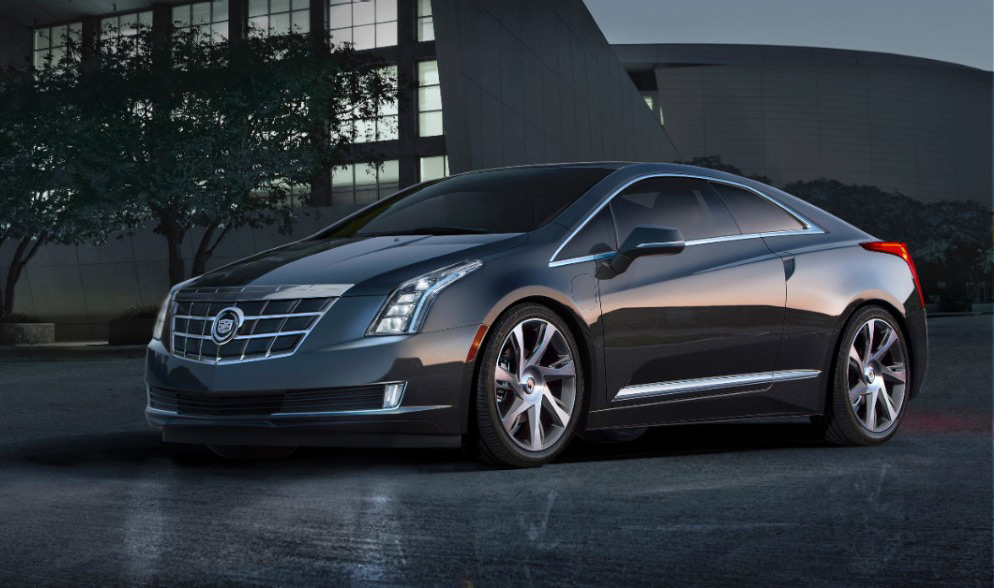
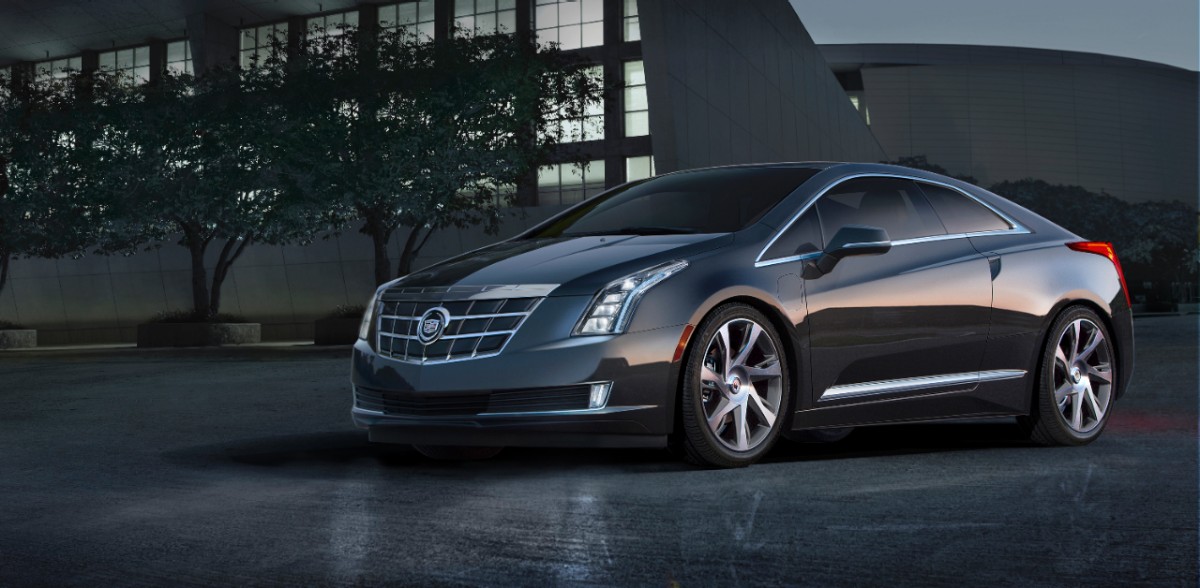
DETROIT, Mich., January 15, 2013 – Cadillac today unveiled the 2014 ELR at the North American International Auto Show. The sleek luxury coupe is a gas-electric hybrid that leverages the Chevrolet Volt’s successful extended range all-electric powertrain.
Using only the energy stored in the battery, the ELR will deliver a GM-estimated range of about 35 miles of pure electric driving, depending on terrain, driving techniques and temperature. This means most daily commutes will require zero gasoline with zero emissions.
Charging the ELR’s battery can be done with a 120V electrical outlet or a dedicated 240V charging station. Once the vehicle is plugged in, owners can schedule either immediate or delayed charges, even coordinating charging according to departure time or when electricity rates are lower.
Because the ELR operates so quietly in all-electric mode, a driver-activated feature sounds a noise to alert pedestrians, particularly those with visual impairments, in an intersection. The alert was developed in conjunction with the American Federation of the Blind.
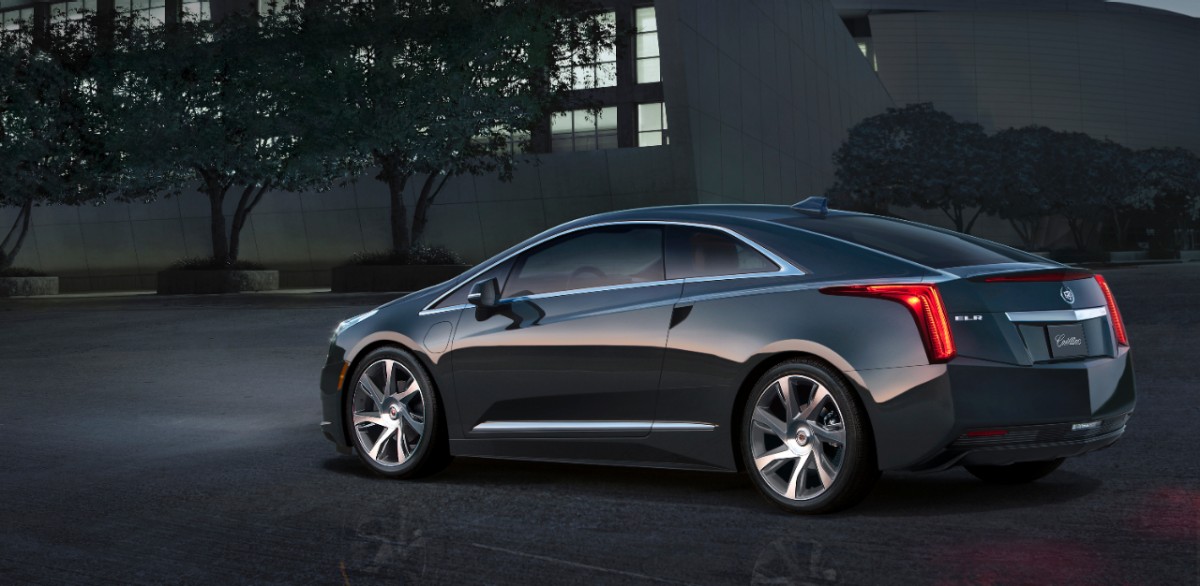
The Cadillac ELR has an aggressive, forward-leaning profile that introduces a new design evolution that will be carried over into future Cadillacs. ELR production begins in the United States in late 2013 with sales starting in early 2014 in North America and expanding to global markets including China and Europe.
Cadillac has been a leading luxury auto brand since 1902. In recent years, Cadillac has engineered a historic renaissance led by artful engineering and advanced technology.
General Motors is trying to find more buyers for the Chevrolet Volt‘s electric technology. So it’s putting it inside a new Cadillac. Source: FULL ARTICLE at Phys.org
The Cadillac design and engineering teams were smiling like a bunch of proud papas here in Detroit this morning, as the Wreath and Crest crew pulled the curtain back on their 2014 ELR. The house was packed for the ELR‘s coming out party, and reaction was enthusiastic amongst the murmuring media, as far as we could gather, while the flashes were firing.
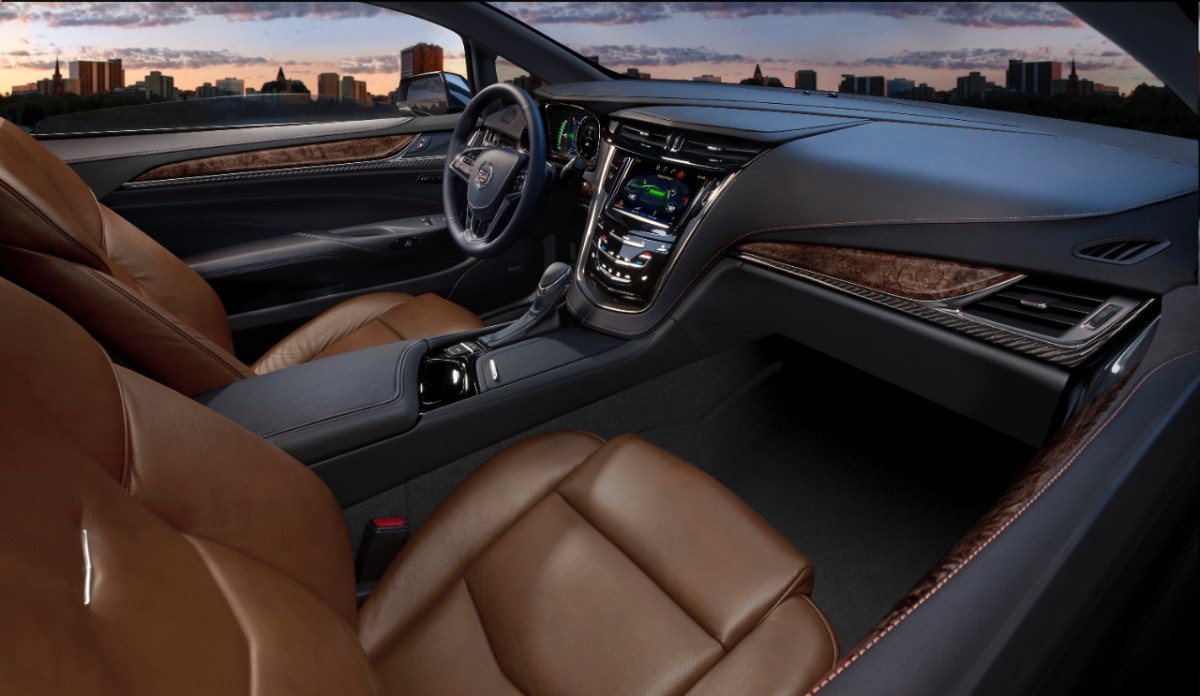
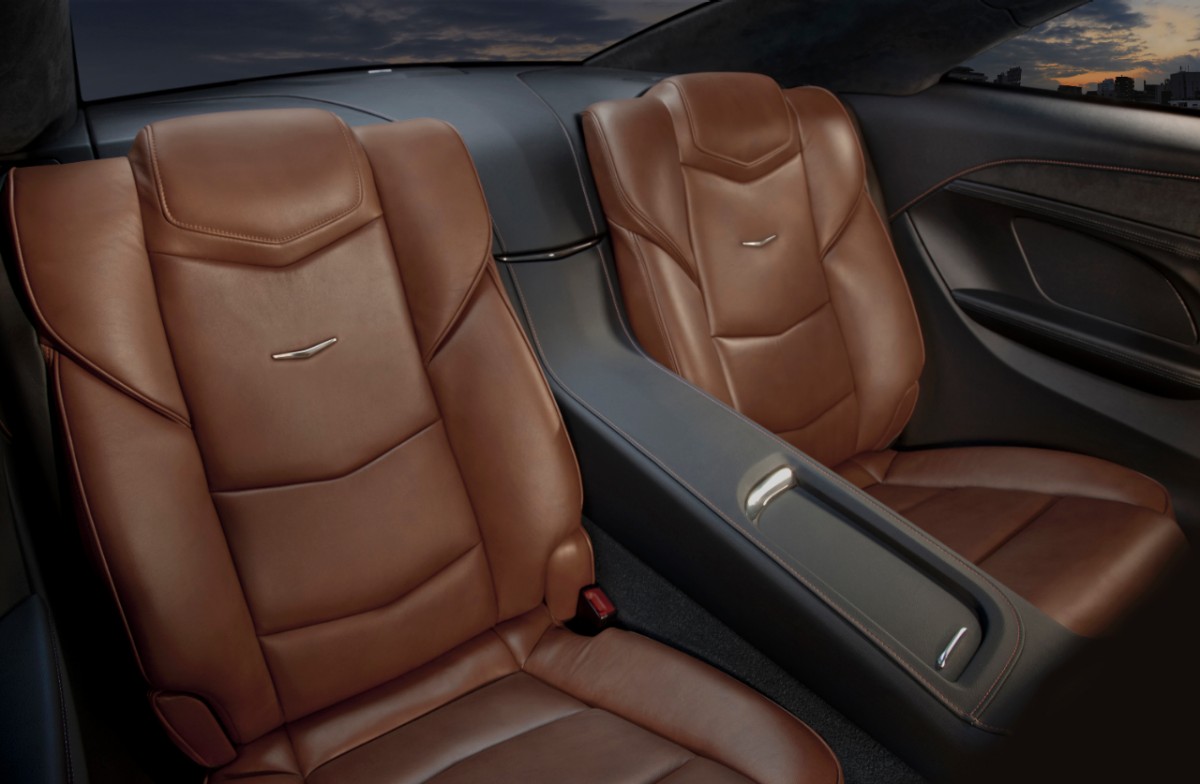
In fact, we think that the sleek styling and aggressive proportions of the Voltec-powered ELR looked even better in the metal than they did in the first official images we saw earlier. Further, the leather-lined interior seems custom made for serious driving, even if the ELR is slightly less than rocket-ship quick.
The new Cadillac makes good use of the basic running gear from the Chevrolet Volt, including the 1.4-liter range-extending gas engine, a 15.6-kWh lithium-ion battery pack, and an electric drive motor that offers 295 pound-feet of torque, and a total system output of 207 horsepower. All-electric range is down by just one mile versus its Chevrolet forebearer, for a total of 35, and Cadillac speculates that the total range with the gasoline generator figured in will top 300 miles.
Have a look at our gallery of live images, or refresh your memory about the details of the car with the press release, below.
Like the idea of the Chevrolet Volt extended range electric sedan, but want something with a bit more luxury and presence? Your wait will soon be over, as Cadillac is debuting its own version of the GM Voltec drivetrain at this week’s Detroit Auto Show.
Like the Volt, the Cadillac ELR is essentially an electric car. When its 16.5 kWh battery pack is depleted, a 1.4-liter gasoline engine starts up to power a range-extending generator. Like the Volt, range on batteries alone is an estimated 35 miles, condition-dependent. Since Cadillac is expected to deliver better performance, the rated output of the ELR’s drivetrain is upped to 207 horsepower and 295 pound-feet of torque, up from 149 horsepower and 273 pound-feet of torque in the Volt.
Cadillac has yet to publish performance numbers, but we expect the ELR will be quicker than the Volt’s 9.2 seconds for the run from 0-60 mph. It’s likely that the top speed will be raised above the Volts 100 mph, too, but performance really isn’t the raison d’etre behind the ELR: style is.
2014 Cadillac ELR – image: GM Corp
Outside, the ELR carries on the angular styling of the ATS, CTS and XTS models, but manages to spin it in an even more modern interpretation. Sure, the trademark vertical head lamp and tail lamp elements (used in Cadillac design since 1948) are there, but there’s no denying that the ELR looks like it just rolled out of some time warp, from a few decades in the future.
2014 Cadillac ELR – image: GM Corp
Inside, the cabin is a blend of the traditional and the high-tech. Sure, there’s plenty of leather, wood and microfiber to satisfy your senses, but there’s also a heavy infusion of technology. The ELR gets a version of Cadillac’s CUE infotainment system, which recognizes voice commands as well as gestures. The car also serves up four driving modes, including Sport and Tour (which are self-explanatory), Mountain (which fires up the generator to ensure sufficient power when needed) and Hold (which runs the car in generator mode to preserve battery power for later use).
2014 Cadillac ELR – image: GM Corp
The Hold mode is designed for drivers who mix city and highway driving on their daily commute. Highway miles quickly consume battery charge, so the ELR (and the Volt) are best run on battery power in an urban environment, and on generator power on the highway.
Cadillac has yet to announce ELR pricing, as the car is still roughly a year away from launch. If all goes as planned, production will begin at GM’s Hamtramck plant in late 2013.
In terms of styling, inside and out, the ELR hits the ball out of the park.
Cadillac has pulled the wraps off of its newest family member, the long-rumored, Voltec-powered, eye-catching extended range hybrid coupe called the ELR. The car makes use of the same basic architecture as the Chevrolet Volt, but has been thoroughly layered on with design, technology and performance tuning – with the goal of being a properly situated product for the Cadillac brand.
In terms of styling, inside and out, the ELR hits the ball out of the park. Designers set an aggressive goal of staying as true as possible to the original Converj show car from 2009. The resulting vehicle is, frankly, as sexy a Cadillac as can be found on the road today. A low, fast roofline is handsomely accented by the ELR‘s strong shoulder line, while the stance is super aggressive thanks to monstrous 20-inch wheels pushed out to the extreme corners of the car. Exterior trim is wrought in either satin chrome or a very subtle black satin chrome (the dark panels inside the egg crate grille wear this finish, as does the outermost frame of the headlights).


 Today at The Car Connection, the 2013 Nissan Leaf gets a price cut and the Honda Fit EV is now on sale on the
  The 2013 Nissan Leaf, now in its third model year, remains the highest-volume battery electric car sold in the
  Today at The Car Connection, we drove the 2013 BMW X3 xDrive28i and updated our ultimate guide to the