Tag Archives: SA

Cuba calls weapons on North Korean ship 'obsolete'

Cuba said military equipment found buried under sacks of sugar on a North Korean ship seized as it tried to cross the Panama Canal was obsolete weaponry from the mid-20th century that it had sent to be repaired.

Panamanian authorities said it might take a week to search the ship, since so far they have only examined one of its five container sections. They have requested help from United Nations inspectors, along with Colombia and Britain, said Javier Carballo, Panama’s top narcotics prosecutor. North Korea is barred by U.N. sanctions from importing sophisticated weapons or missiles.

Panamanian President Ricardo Martinelli said Tuesday that the ship identified as the 14,000-ton Chong Chon Gang, which had departed Cuba en route to North Korea, was carrying missiles and other arms “hidden in containers underneath the cargo of sugar.”

Martinelli tweeted a photo showing a green tube that appears to be a horizontal antenna for the SNR-75 “Fan Song” radar, which is used to guide missiles fired by the SA-2 air-defense system found in former Warsaw Pact and Soviet-allied nations, said Neil Ashdown, an analyst for IHS Jane’s Intelligence.

“It is possible that this could be being sent to North Korea to update its high-altitude air-defense capabilities,” Ashdown said. Jane’s also said the equipment could be headed to North Korea to be upgraded.

North Korea has not commented on the seizure, during which 35 North Koreans were arrested after resisting police efforts to intercept the ship in Panamanian waters last week, according to Martinelli. He said the captain had a heart attack and also tried to commit suicide.

But Cuba’s Foreign Ministry released a statement late Tuesday acknowledging that the military equipment belonged to the Caribbean nation, saying it had been shipped out to be repaired and returned to the island.

“The agreements subscribed by Cuba in this field are supported by the need to maintain our defensive capacity in order to preserve national sovereignty,” the statement read.

It said the vessel was bound for North Korea mostly loaded with sugar — 10,000 tons of it — but added that the cargo also included 240 metric tons of “obsolete defensive weapons”: two Volga and Pechora anti-aircraft missile systems, nine missiles “in parts and spares,” two Mig-21 Bis and 15 engines for those airplanes.

It …read more

Source: FULL ARTICLE at Fox World News
N. Korean ship carrying weapons seized near Panama Canal

A North Korean ship carrying weapons system parts buried under sacks of sugar was seized as it tried to cross the Panama Canal on its way from Cuba to its home country, which is barred by United Nations sanctions from importing sophisticated weapons or missiles, Panamanian officials said Tuesday.

The ship appeared to be transporting a radar-control system for a Soviet-era surface-to-air missile system, according to a private defense analysis firm that examined a photograph of the find.

Panamanian President Ricardo Martinelli said the ship identified as the 14,000-ton Chong Chon Gang was carrying missiles and other arms “hidden in containers underneath the cargo of sugar.”

Martinelli tweeted a photo showing a green tube that appears to be a horizontal antenna for the SNR-75 “Fan Song” radar, which used to guide missiles fired by the SA-2 air-defense system found in former Warsaw Pact and Soviet-allied nations, said Neil Ashdown, an analyst for IHS Jane’s Intelligence.

“It is possible that this could be being sent to North Korea to update its high-altitude air-defense capabilities,” Ashdown said.

Panamanian authorities said one container buried under sugar sacks contained radar equipment that appears to be designed for use with air-to-air or surface-to-air missiles, said Belsio Gonzalez, director of Panama’s National Aeronautics and Ocean Administration. He said Panamanian authorities expected to find the missiles themselves in containers that must still be searched. An Associated Press journalist who gained access to the rusting ship saw green shipping containers that had been covered by hundreds, perhaps thousands, of white sacks marked “Cuban Raw Sugar.”

Later Tuesday, Cuba acknowledged that the military equipment belonged to the Caribbean nation, saying it had been shipped out to be repaired and returned to the island.

A statement from the Foreign Ministry said the vessel was bound for North Korea mostly loaded with sugar but added that the cargo also included 240 metric tons of “obsolete defensive weapons”: two Volga and Pechora anti-aircraft missile systems, nine missiles “in parts and spares,” two Mig-21 Bis and 15 engines for those airplanes.

“The agreements subscribed by Cuba in this field are supported by the need to maintain our defensive capacity in order to preserve national sovereignty,” the statement read.

The U.N. Security Council has imposed four rounds of increasingly tougher sanctions against North Korea since its first nuclear test on Oct. 9, 2006.

Under current sanctions, all U.N. member states are prohibited from directly or indirectly supplying, selling or transferring all arms, missiles or missile systems and the equipment and technology to make them to North Korea, with the exception of small arms and light weapons.

The most recent resolution, approved in March after Pyongyang’s latest nuclear test, authorizes all countries to inspect cargo in or transiting through their territory that originated in North Korea, or is destined to North Korea if a state has credible information the cargo could violate Security Council resolutions.

“Panama obviously has an important responsibility to ensure that the Panama Canal is utilized for safe and legal commerce,” said Acting U.S. Ambassador Rosemary DiCarlo, who is the current Security Council president. …read more

Source: FULL ARTICLE at Fox World News

Israel Strikes

By Jim Emerson

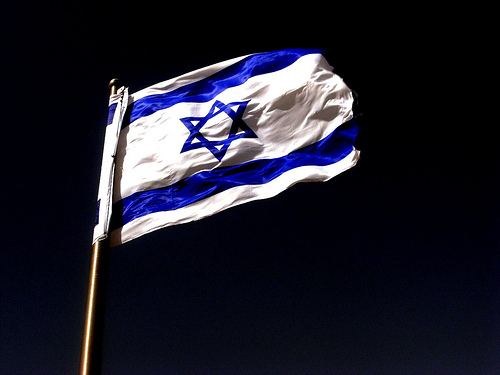
Israel flag SC Israel Strikes

Israeli warplanes reportedly stuck a convoy of weapons inside Syria that was destined for Hezbollah in Lebanon.  The convoy was carrying Russian manufactured SA-17 missiles to be used by the terrorist organization to target Israeli Aircraft. Israel publicly warned Syria that it would take action to prevent the shipment of weapons to any terrorist group, especially chemical weapons. Israeli intelligence has been monitoring the areas between Syria and Lebanon for any sign of weapons convoys.

SA-17

The SA-17 (Grizzly) is a mobile surface-to-air missile (SAM) system that in terrorist hands would curtail Israel’s ability to operate near or in Lebanese airspace against terrorist targets. It would be seen as a “game changer” in the region and a direct threat to Israel. Hezbollah can use the SA-17 to protect its missile launching sites and convoy routes from Syria and protecting terrorists from retaliatory airstrikes.

By providing Hezbollah SA-17 systems, who knows what the Syrians and Iranians will provide to the terrorists to use against the Jewish nation? If the Assad regime could goad Israel into targeting more facilities inside Syria, he could rally the population against the Rebels by claiming they are being supported by the Zionists. The Iranians will be more than glad to assist any group planning to attack Israel.

Denial

The Syrian military denied the existence of any weapons convoy and claimed that a so-called scientific research facility near Damascus was attacked. The facility at Jamraya is actually a weapon development canter which is frequented by Russian and Iranian advisors. There is conflicting information as to whether the site is used for chemical weapons development and testing; but being so close to the capital, it would be unlikely. The denial was most likely a cover story meant for the Syrian population to link the Free Syrian rebels with Israel. To counter Assad regime claims, the rebels stated they attacked the facility. An unnamed U.S. official confirmed that Israel did strike a convoy of trucks; and although the exact location is unknown at this time, it is most likely located near the Jamrayaresearch facility, about 10 miles from the Lebanon border.

Photo Credit: kudumomo (Creative Commons)

Source: FULL ARTICLE at Western Journalism

Ksh/perl banner – is there one :(-

By newbie_01

Hi,

Our Red Hat Linux machines, unlike Solaris, do not have the banner command. I am not the SA for these machines and the SA refuses to put in banner. Not sure what is his main objection to it, but he just flatly say no, end of story.

I am using banner as a quick way of identifying the progress run of the script.

Does anyone know of any ksh or Perl script that I can use in place of banner? If not, does anyone have a trick of maybe putting in a progress identifier on your scripts especially if it is a script that runs for awhile, you would want to know which part or sub of the script is it running on at some specific point in time.

Any advice will be much appreciated. Thanks in advance.

Source: FULL ARTICLE at The UNIX and Linux Forums

Syrian rebels slam Assad inaction on Israeli raid

Syrian opposition leaders and rebels on Friday slammed President Bashar Assad for not responding to a rare Israeli airstrike near Damascus, calling it proof of his weakness and acquiescence to the Jewish State.

The opposition’s sharp reaction underlines how those seeking to topple the Syrian leader might be more prepared to tangle with Israel if they came to power.

Wednesday’s Israeli airstrike that U.S. officials say hit a convoy of anti-aircraft weapons bound for the militant Lebanese Hezbollah group also has fueled rage among many Syrians who say they now must fear warplanes from both Assad’s forces and Israel.

“Assad never once in his life stood up to Israel,” said Kamal Labwani, a prominent Syrian dissident and member of the Syrian National Coalition, an umbrella group of those trying to oust Assad. “All he ever did is ‘reserve the right to retaliate’ but he never retaliated against anyone other than the Syrian people and the Free Syrian Army.”

Syria‘s army chief of staff, Gen. Ali Abdullah Ayoub, warned Friday against testing his country’s capabilities.

That was a day after Syria‘s ambassador to Lebanon, Ali Abdul-Karim Ali, said Damascus “has the option and the capacity to surprise in retaliation,” but that it was up to the relevant authorities to choose the time and place.

The comments reflected increased tension between Syria and Israel.

Up to now, the Jewish state has refrained from actions that could be interpreted as intervention in Syria‘s civil war. But the Syrian government’s overall response to this week’s airstrike was seen as passive, and most Syrians said they did not expect their military to retaliate.

“I am 100 percent sure the regime will not retaliate,” Mosab, a rebel fighter told The Associated Press in a telephone interview. The fighter, who was deployed near the Syrian capital, Damascus, declined to give his full name or precise location for security reasons.

The uprising against Assad began in March 2011 with largely peaceful pro-reform protests and developed into a civil war which the United Nations says has killed more than 60,000 people. The Syrian government maintains that there is no uprising in Syria but a conspiracy against the country because of its support for anti-Israeli groups.

Assad and his late father, Hafez, who together have ruled Syria for four decades, have often tried to draw political legitimacy from the country’s combative stance toward Israel. The Assad regime has long sheltered radical Palestinian groups and has facilitated Iran‘s assistance to militant groups Hamas and Hezbollah.

Israel captured the Golan, a strategic plateau, from Syria in the 1967 war, and Syria demands the area back as part of any peace deal. But despite the hostility between the two countries, Israel and Syria have not gone to war since 1973 and Syria has kept the border area largely calm for decades.

In 2003 and again in 2007, Israeli warplanes struck targets in Syria. And in 2006, Israeli jets flew over Assad’s palace in a show of force after Syrian-backed militants captured an Israeli soldier in the Gaza Strip.

Syrian vowed to retaliate for the attacks but never did.

On Friday, Syria‘s opposition coalition criticized the government for not defending the country against the latest Israeli air raid, saying the Syrian army is too busy shelling civilian areas in Syria.

“This is not the first time that Israeli warplanes violated Syrian sovereignty under the eyes and ears of those who are supposed to protect it,” the coalition said in its statement. “Israelis have gotten used to condemnations and strong words that turn out to be nothing more than media bubbles.”

It is a real tragedy, the statement said, that while the regime’s warplanes and helicopters bombed civilian homes in one part of Syria, Israeli jets attacked targets in another.

The opposition group promised the Syrian people it would use political and diplomatic means to halt such attacks and said it would establish a “deterrent force” to guard against any such future attacks.

Those comments raised the question about how those seeking to topple Assad would handle the thorny issue of relations with Israel if they came to power.

Many among Syria‘s disparate opposition leaders are Syrian and Arab nationalists fiercely opposed to the Jewish State.

Mouaz al-Khatib, a 52-year-old preacher-turned-activist, has been criticized by some for calling Zionism a “cancerous movement” and praising Iraq‘s late dictator Saddam Hussein for “terrorizing the Jews.”

The umbrella group is dominated by members of the fundamentalist Muslim Brotherhood, which is known for its enmity to Israel. And among the overwhelmingly Sunni Muslim rebels who are fighting to end Assad’s rule, the Islamic extremists are gaining dominance.

Labwani, the Syrian dissident, told the AP that “unlike Assad, we know who the real enemy is.”

“The first thing we would do is ask U.N. peacekeepers on the Golan to leave, and we will free occupied Syrian territory. We want all our rights.”

On Friday, Israeli warplanes flew over south Lebanon, part of stepped up flyovers that residents and Lebanese officials say have been under way all week.

Israel had no comment on Lebanon‘s description of the air force flights over the border region. Israeli planes frequently fly over southern Lebanon, and Lebanon often files complaints with the U.N. over the incursions into its airspace.

According to a U.S. official, the Israeli airstrike Wednesday near Damascus targeted trucks containing SA-17 anti-aircraft missiles. The trucks were next to the research center the Syrians identified, and the strikes hit both the trucks and the facility.

Advanced anti-aircraft missiles like the SA-17 in the hands of Hezbollah could change the strategic equation, which so far has allowed Israel to send warplanes over Lebanon practically unopposed.

The Syrian military denied that the target of the attack was a weapons convoy. It said low-flying Israeli jets crossed into the country over the Israeli-occupied Golan Heights and bombed a scientific research center. The facility is in the area of Jamraya, northwest of Damascus, about 15 kilometers (10 miles) from the Lebanese border.

Source: FULL ARTICLE at Fox World News

Israeli warplanes fly over Lebanon as Syrian army chief 's warning heightens tensions

Israeli warplanes flew over southern Lebanon Friday, two days after the Jewish state launched an airstrike near Damascus, as Syria‘s army chief of staff warned against testing his country’s capabilities.

Gen. Ali Abdullah Ayoub made his comments Thursday during a visit to some military units in the country. The Al-Baath newspaper, the mouthpiece of President Bashar Assad‘s ruling party, quoted Ayoub as saying Syria will never change its stance “no matter how much the enemy carries out provocative and hostile acts.”

The latest overflights came after officials said Israel launched a rare airstrike Wednesday inside Syria, targeting a convoy carrying anti-aircraft weapons bound for Hezbollah, the powerful Lebanese militant group allied with Syria and Iran.

The general’s comments reflected increased tensions between Syria and Israel, which up to now has refrained from actions that could be interpreted as intervention in Syria‘s civil war.

Israel had no comment on Lebanon‘s description of the air force flights over the border region. There were no reports of airstrikes. Israeli planes frequently fly over southern Lebanon, and Lebanon often files complaints with the U.N. over the incursions into its airspace.

According to a U.S. official, the Israeli airstrikes Wednesday targeted trucks containing SA-17 anti-aircraft missiles. The trucks were next to the research center the Syrians identified, and the strikes hit both the trucks and the facility.

Advanced anti-aircraft missiles like the SA-17 in the hands of Hezbollah could change the strategic equation, which so far has allowed Israel to send warplanes over Lebanon practically unopposed.

The Syrian military denied that the target of the attack was a weapons convoy. It said low-flying Israeli jets crossed into the country over the Israeli-occupied Golan Heights and bombed a scientific research center. The facility is in the area of Jamraya, northwest of Damascus, about 10 miles from the Lebanese.

The air raid raised tension in the already boiling region as a result of Syria‘s 22-month civil war that has left more than 60,000 people dead, according to the U.N. Many fear Syria‘s civil war could spill to neighboring countries.

Syria and its close ally Iran threatened retaliation, and Arab nations along with Russia condemned the raid.

In Israel, Foreign Ministry spokesman Yigal Palmor declined to comment on Israeli media reports that its embassies were instructed to be alert for threats after Syria‘s warnings. Syrian-allied Hezbollah has been accused of staging deadly attacks against Israelis abroad in past years.

At home, Israel positioned an additional “Iron Dome” rocket defense system in northern Israel on Thursday, security officials said, after moving another to the northern city of Haifa earlier this week. The officials spoke on condition of anonymity because they were not authorized to discuss the battery’s placement with reporters.

Capt. Eytan Buchman, an Israeli military spokesman, said the military’s home front command has not raised its alert level.

The main Syrian opposition criticized the government for not defending the country against the Israeli air raid saying the Syrian army is busy shelling civilian areas in Syria.

“This is not the first time that Israelis warplanes attacked targets inside Syria. Israelis have gotten used to condemnations and strong words that turn out to be nothing more than media bubbles,” said a statement issued by the Syrian National Coalition.

“The tragedy is that the regime’s, warplanes, helicopters and artilleries were bombarding homes of villagers and turning children into dead bodies and destroying houses over their inhabitants while at the same time , Israeli warplanes were attacking another position,” the group said.

“Those who were watching the attacks of warplanes were not able to differentiate between Assad’s warplanes and those of the Zionists,” the coalition said. “The butchers are many but the victim is one: Syria.”

Ayoub, the Syrian military commander, said the “battle with the Zionist enemy continues.” He said rebel gunmen fighting against his troops are “tools of the Zionist entity.” Israel and Syria have been bitter enemies for six decades.

“We know our capabilities and readiness to use all these capabilities at the suitable time,” Ayoub said. “Those who think they can test our armed forces are mistaken.”

The uprising against Assad began in March 2011 with pro-reform protests and developed into a civil war. The Syrian government says there is no uprising in Syria but a conspiracy against the country because of its support for anti-Israeli groups.

In Lebanon, the security official said the Israeli fighter planes were seen heading from southern Lebanon toward the eastern Bekaa Valley bordering Syria. He spoke on condition of anonymity in line with regulations.

Butros Wanna, a resident in the southern Lebanese town of Marjayoun, near the border with Israel, said Israeli flights have been intense for the past four days.

“There is something not normal going on. Warplanes are always in the air,” said Wanna

Source: FULL ARTICLE at Fox World News

Israel may feel need to strike Syria again

An Israeli air attack staged in Syria this week may be a sign of things to come.

Israeli military officials appear to have concluded that the risks of attacking Syria are worth taking when compared to the dangers of allowing sophisticated weapons to reach Hezbollah guerrillas in neighboring Lebanon.

With Syrian President Bashar Assad’s grip on power weakening, Israeli officials fear he could soon lose control over his substantial arsenal of chemical and advanced weapons, which could slip into the hands of Hezbollah or other hostile groups. These concerns, combined with Hezbollah’s own domestic problems, mean further military action could be likely.

Tzachi Hanegbi, an incoming lawmaker in Prime Minister Benjamin Netanyahu’s Likud Party and a former chairman of parliament’s influential foreign affairs and defense committee, signaled Thursday that Israel could be compelled to act on its own. While Israel‘s preference is for Western powers to gain control over Syria‘s arms stockpile, he said there are no signs of that happening.

Israel finds itself, like it has many times in the past, facing a dilemma that only it knows how to respond to. And it could well be that we will reach a stage where we will have to make decisions,” Hanegbi told Israel‘s Army Radio Thursday. Hanegbi, like other Israeli officials, would not confirm Israeli involvement in the airstrike.

In this week’s incident, Israeli warplanes conducted a rare airstrike inside Syria, according to U.S. officials who said the target was a convoy believed to be carrying anti-aircraft weapons bound for Hezbollah, the powerful Lebanese militant group allied with Syria and Iran.

The Syrian military has denied the existence of any weapons shipment and said a military research facility outside Damascus was hit.

On Thursday, Syria threatened to retaliate, while Hezbollah condemned the attack as “barbaric aggression.” Iran, which supplies arms to Syria, Hezbollah and the Hamas militant group in Gaza, said the airstrike would have significant implications for Israel. Syrian ally Russia said it appeared to be an unprovoked attack on a sovereign nation.

Syria‘s ambassador to Lebanon, Ali Abdul-Karim Ali, said Damascus “has the option and the capacity to surprise in retaliation.” He told Hezbollah’s al-Ahd news website that it was up to the relevant authorities to choose the time and place.

For now, Israeli officials seem to be playing down the threats.

Israel took a big gamble out of the belief that Iran and Hezbollah won’t retaliate. The question is, ‘Are they right or not?'” said Moshe Maoz, a professor emeritus at Hebrew University who specializes in Syria.

Officials believe that Assad’s position in Syria is so precarious that he cannot risk opening a new front with Israel. With an estimated 60,000 Syrians killed in the civil war, Israeli officials also think it’s too late for Assad to rally his bitterly divided nation behind him.

Syria is in such a bad state right now that an Israeli retaliation to a Syrian action would be harsh and could topple the regime. Therefore Syria is not responding,” Maoz said.

Israel is far more worried about the threat of sophisticated weapons reaching Hezbollah. In a monthlong 2006 war, Hezbollah fired some 4,000 rockets and missiles into Israel before the conflict ended in a stalemate. Israeli officials believe the guerrilla group has restocked its arsenal with tens of thousands of missiles, some capable of striking deep inside the Jewish state.

Resigned to this fact, Israel has set a number of “red lines” for Hezbollah that it says are unacceptable, in particular the acquisition of new weapons that it believes would change the balance of power in the region. These include chemical weapons and sophisticated anti-aircraft and surface-to-sea missiles.

This week’s airstrike is believed to have targeted Russian-made SA-17 anti-aircraft missiles that Syria recently obtained. If they were to reach Hezbollah, the SA-17s would greatly inhibit the Israeli air force’s ability to operate in Lebanon. Israel has frequently flown sorties over Lebanese skies since 2006.

The airstrike is part of an Israeli strategy known to military planners as “the policy of prevention,” or the “war between wars.” In recent years, Israel is believed to have launched a number of covert missions, including airstrikes in Sudan and assassinations of key Hezbollah and Hamas militants, aimed at disrupting the flow of weapons to its Iranian-backed enemies. Israel has never acknowledged involvement.

Israeli security officials believe that Hezbollah, despite its claims of victory, is still deterred by the experience of the 2006 war, in which it lost hundreds of fighters. Instead of a direct war, Israel fears Hezbollah might try to strike Israeli or Jewish targets around the world. Israel has accused Hezbollah of a string of attacks on Israeli targets in recent years, including a deadly attack on Israeli tourists in Bulgaria last July.

The Israeli airstrike comes at a particularly sensitive and vulnerable time for Hezbollah in Lebanon. Despite its formidable weapons arsenal and political clout in the country, the group’s credibility and maneuvering space has been significantly reduced in the past few years.

Hezbollah still suffers from the fallout of the 2006 war, which many in Lebanon accuse it of provoking by kidnapping soldiers from the border area. Since then, the group has come under increasing pressure at home to disarm, leading to sectarian tensions between its Shiite supporters and Sunnis from the opposing camp that have often spilled into deadly street fighting.

When Hezbollah sent an Iranian-made reconnaissance drone over Israel in November, the group boasted of its capabilities — but critics in Lebanon slammed it for embarking on a unilateral adventure that could provoke Israel.

Despite persistent reports and accusations that Hezbollah members are fighting alongside the military in Syria, Hezbollah has largely approached the Syria conflict with caution, mindful that any action it takes could backfire.

“In different times, Hezbollah would have reacted to Israel‘s surgical strike, but not today,” said Bilal Saab, director of the Institute for Near East and Gulf Military Analysis, North America. “This is a time for hunkering down and weathering the storm.”

The uprising in Syria, the main transit point of weapons brought from Iran to Hezbollah, presents the group with its toughest challenge since its inception in 1982.

The group could still get weapons, but would struggle to get them as easily without the Syria supply route. Hezbollah leader Sheik Hassan Nasrallah‘s public support for the Assad regime has proved costly and the group’s reputation has taken a severe beating. Former champions of the group now describe it as hypocritical for supporting Arab Spring uprisings in Tunisia, Libya and Egypt, but not in Syria.

While the attack overnight Tuesday, believed to be the first by Israel on Syrian soil since 2007, appeared to come out of nowhere, signs of impending action were evident in recent days.

On Jan. 23, the day after national elections, Netanyahu convened top security officials for an emergency meeting to discuss the situation in Syria.

One of the meeting participants, Vice Premier Silvan Shalom, warned this week that Israel could be forced to carry out a pre-emptive attack under certain circumstances. The same day, Israel suddenly moved a new, state-of-the-art rocket-defense system to the northern city of Haifa, which was hit hard by Hezbollah rocket fire during a 2006 war.

Uzi Rabi, a military analyst at Tel Aviv University’s Dayan Center, said the attack was a “kind of message” sent by Israel to Syria and Hezbollah.

“It says we do have capabilities when it comes to intelligence gathering … and this would serve as kind of a warning sign to Hezbollah not to transfer chemical weaponry from Syria to Hezbollah,” he said.

___

Federman reported from Jerusalem.

Source: FULL ARTICLE at Fox World News

Israeli jets bomb military target in Syria

Israel launched a rare airstrike inside Syria, U.S. officials said Wednesday, targeting a convoy believed to contain anti-aircraft weapons bound for Hezbollah militants in Lebanon. The attack adds a potentially flammable new element to tensions already heightened by Syria‘s civil war.

It was the latest salvo in Israel‘s long-running effort to disrupt the Shiite militia’s quest to build an arsenal capable of defending against Israel‘s air force and spreading destruction inside the Jewish state.

Regional security officials said the strike, which occurred overnight Tuesday, targeted a site near the Lebanese border, while a Syrian army statement said it destroyed a military research center northwest of the capital, Damascus. They appeared to be referring to the same incident.

U.S. officials said the target was a truck convoy that Israel believed was carrying sophisticated anti-aircraft weapons bound for Hezbollah in Lebanon. They spoke on condition of anonymity because they were not authorized to speak about the operation.

Regional officials said the shipment included sophisticated Russian-made SA-17 anti-aircraft missiles, which if acquired by Hezbollah would be “game-changing,” enabling the militants to shoot down Israeli jets, helicopters and surveillance drones. the officials spoke on condition of anonymity because they were not authorized to brief the media.

In a statement, the Syrian military denied the existence of any such shipment and said a scientific research facility outside Damascus was hit by the Israeli warplanes.

The Israeli military declined to comment. However, many in Israel worry that as Syrian President Bashar Assad loses power, he could strike back by transferring chemical or advanced weapons to Hezbollah, which is neighboring Lebanon‘s most powerful military force and is committed to Israel‘s destruction.

The airstrike follows decades of enmity between Israel and allies Syria and Hezbollah, which consider the Jewish state their mortal enemy. The situation has been further complicated by the civil war raging in Syria between the Assad regime and rebel brigades seeking his ouster.

The war has sapped Assad’s power and threatens to deprive Hezbollah of a key supporter, in addition to its land corridor to Iran. The two countries provide Hezbollah with the bulk of its funding and arms.

A Syrian military statement read aloud on state TV Wednesday said low-flying Israeli jets crossed into Syria over the Israeli-occupied Golan Heights and bombed a military research center in the area of Jamraya, northwest of Damascus.

The strike destroyed the center and damaged a nearby building, killing two workers and wounding five others, the statement said.

The military denied the existence of any convoy bound for Lebanon, saying the center was responsible for “raising the level of resistance and self-defense” of Syria‘s military.

“This proves that Israel is the instigator, beneficiary and sometimes executor of the terrorist acts targeting Syria and its people,” the statement said.

Israel and Hezbollah fought an inconclusive 34-day war in 2006 that left 1,200 Lebanese and 160 Israelis dead.

While the border has been largely quiet since, the struggle has taken other forms. Hezbollah has accused Israel of assassinating a top commander, and Israel blamed Hezbollah and Iran for a July 2012 attack on Israeli tourists in Bulgaria. In October, Hezbollah launched an Iranian-made reconnaissance drone over Israel, using the incident to brag about its expanding capabilities.

Israeli officials believe that Hezbollah’s arsenal has markedly improved since 2006, now boasting tens of thousands of rockets and missiles and the ability to strike almost anywhere inside Israel.

Israel suspects that Damascus obtained a battery of SA-17s from Russia after an alleged Israeli airstrike in 2007 that destroyed an unfinished Syrian nuclear reactor.

Earlier this week, Israeli Prime Minister Benjamin Netanyahu warned of the dangers of Syria‘s “deadly weapons,” saying the country is “increasingly coming apart.”

The same day, Israel moved a battery of its new “Iron Dome” rocket defense system to the northern city of Haifa, which was battered by Hezbollah rocket fire in the 2006 war. The Israeli army called that move “routine.”

Syria, however, cast the airstrike in a different light, linked to the country’s civil war, which it blames on terrorists carrying out an international conspiracy.

Despite its icy relations with Assad, Israel has remained on the sidelines of efforts to topple him, while keeping up defenses against possible attacks.

Israeli defense officials have carefully monitored Syria‘s chemical weapons, fearing Assad could deploy them or lose control of them to extremist fighters among the rebels.

President Barack Obama has called the use of chemical weapons a “red line” that if crossed could prompt direct U.S. intervention, though U.S. officials have said Syria‘s stockpiles still appear to be under government control.

The strike was Israel‘s first inside Syria since September 2007, when warplanes destroyed a site that the U.N. nuclear watchdog deemed likely to be a nuclear reactor. Syria denied the claim, saying the building was a non-nuclear military site.

Syria allowed international inspectors to visit the bombed site in 2008, but it has refused to allow nuclear inspectors new access. This has heightened suspicions that Syria has something to hide, along with its decision to level the destroyed structure and build on its site.

In 2006, Israeli warplanes flew over Assad’s palace in a show of force after Syrian-backed militants captured an Israeli soldier in the Gaza Strip.

And in 2003, Israeli warplanes attacked a suspected militant training camp just north of the Syrian capital, in response to an Islamic Jihad suicide bombing in the city of Haifa that killed 21 Israelis.

Syria vowed to retaliate for both attacks but never did.

In Lebanon, which borders both Israel and Syria, the military and the U.N. agency tasked with monitoring the border with Israel said Israeli warplanes have sharply increased their activity in the past week.

Israeli violations of Lebanese airspace are not uncommon, and it was unclear if the recent activity was related to the strike in Syria.

Syria‘s primary conflict with Israel is over the Golan Heights, which Israeli occupied in the 1967 war. Syria demands the area back as part of any peace deal. Despite the hostility, Syria has kept the border quiet since the 1973 Mideast war and has never retaliated for Israeli attacks.

In May 2011, only two months after the uprising against Assad started, hundreds of Palestinians overran the tightly controlled Syria-Israeli frontier in a move widely thought to have been facilitated by the Assad regime to divert the world’s gaze from his growing troubles at home.

___

Associated Press writers Lolita C. Baldor and Bradley Klapper in Washington, and Zeina Karam in Beirut contributed to this report.

Source: FULL ARTICLE at Fox World News

Israel conducts airstrike on truck convoy in Syria, regional security forces say

Israel conducted an airstrike inside Syria overnight near the border with Lebanon, hitting a convoy of trucks, U.S. and regional officials said Wednesday.

The regional officials said Israel had been planning in the days leading up to the airstrike to hit a shipment of weapons bound for the Islamist militant group Hezbollah in Lebanon. They said the shipment included sophisticated, Russian-made SA-17 anti-aircraft missiles, which would be strategically “game-changing” in the hands of Hezbollah.

Hezbollah has committed to Israel‘s destruction and has gone to war against the Jewish state in the past.

A U.S. official said the strike hit a convoy of trucks.

All the officials spoke on condition of anonymity because they were not authorized to discuss the strike.

The Israeli military declined to comment, and Syrian officials and state media were silent on the issue.

Top Israeli officials have recently expressed worries that if desperate, the regime of President Bashar Assad could pass chemical weapons to Hezbollah or other militant groups. U.S. officials say they are tracking Syria‘s chemical weapons and that they still appear to be solidly under regime control.

Among Israeli security officials’ chief fears is that Hezbollah could get its hands on Syrian chemical arms and SA-17 anti-aircraft missiles. If that were to happen, it would change the balance of power in the region and greatly hinder Israel‘s ability to conduct air sorties in Lebanon.

Israel suspects that Damascus obtained a battery of SA-17s from Russia after an alleged Israeli airstrike in 2007 that destroyed an unfinished Syrian nuclear reactor.

Earlier this week, Israel moved a battery of its new “Iron Dome” rocket defense system to the northern city of Haifa, which was battered by Hezbollah rocket fire in the 2006 Israel-Hezbollah war. The Israeli army called that move “routine.”

The military in Lebanon, which shares borders with both Israel and Syria, said Wednesday that Israeli warplanes have sharply increased their activity over Lebanon in the past week, including at least 12 sorties in less than 24 hours in the country’s south.

A senior Lebanese security official said there were no Israeli airstrikes inside Lebanese territory. Asked whether it could have been along the border on the Syrian side, he said that that could not be confirmed as it was out of his area of operations.

He spoke on condition of anonymity because he was not authorized to speak to the media.

A Lebanese army statement said the last of the sorties took place at 2 a.m. local time Wednesday. It said four warplanes which flew in over the southernmost coastal town of Naqoura hovered for several hours over villages in southern Lebanon before leaving Lebanese airspace.

It said similar flights by eight other warplanes were conducted Tuesday.

A Lebanese security official said the flights were part of “increased activity” in the past week but did not elaborate. He spoke on condition of anonymity because he was not authorized to brief the media.

The area of Lebanon where the flights took place borders southern Syria.

Israeli violations of Lebanese airspace are not uncommon and Lebanese authorities routinely lodge complaints at the U.N. against the flights.

Source: FULL ARTICLE at Fox World News

Israel conducts airstrike on Syria

Regional security officials say Israel conducted an airstrike inside Syria overnight near the border with Lebanon.

The two officials did not say what the target was. But they said Wednesday that Israel had been making plans in the days leading up to the airstrike to hit a shipment of weapons bound for the anti-Israel militant group Hezbollah in Lebanon.

They said the shipment included sophisticated, Russian-made SA-17 anti-aircraft missiles, which would be strategically “game-changing” in the hands of Hezbollah.

Source: FULL ARTICLE at Fox World News

Lebanon says Israeli jets ramping up activity amid concerns over Syrian weapons

The Lebanese military said Wednesday that Israeli warplanes have sharply increased their activity over Lebanon in the past week, including at least 12 sorties in less than 24 hours in the country’s south.

The flights come amid Israeli concerns about the civil war in neighboring Syria and fears that advanced weapons could reach hostile groups in Syria or the militant anti-Israel Hezbollah group in Lebanon.

Among Israeli security officials’ chief fears is that Hezbollah could get its hands on Syrian chemical arms and SA-17 anti-aircraft missiles. If that were to happen, it would change the balance of power in the region and greatly hinder Israel‘s ability to conduct air sorties in Lebanon.

Israel believes that Damascus obtained a battery of SA-17s from Russia after an alleged Israeli airstrike in 2007 that destroyed an unfinished Syrian nuclear reactor.

Earlier this week, Israel moved a battery of its new “Iron Dome” rocket defense system to the northern city of Haifa, which was battered by Hezbollah rocket fire in the 2006 Israel-Hezbollah war. The Israeli army called that move “routine.”

A Lebanese army statement said the last of the sorties took place at 2 a.m. local time Wednesday. It said four warplanes which flew in over the southernmost coastal town of Naqoura hovered for several hours over villages in southern Lebanon before leaving Lebanese airspace.

It said similar flights by eight other warplanes were conducted Tuesday.

There was no immediate comment from Israel.

A Lebanese security official said the flights were part of “increased activity” in the past week but did not elaborate. He spoke on condition of anonymity because he was not authorized to brief the media.

The area of Lebanon where the flights took place borders southern Syria.

Israeli violations of Lebanese airspace are not uncommon and Lebanese authorities routinely lodge complaints at the U.N. against the flights.

Source: FULL ARTICLE at Fox World News

Who can buy Office 2013 for $9.95?

Microsoft today added Office 2013 to the Home Use Program (HUP), which lets employees of some companies and organizations buy the new suite for $9.95.

The deal had been tipped previously by several sources, including a Microsoft HUP marketing portal, which yesterday noted that promotional materials would be available to volume licensees on Jan. 17. Vanderbilt University had also told its faculty and staff that Office 2013 would be hit HUP no later than the middle of this month.

Enterprises and organizations with Software Assurance (SA) plans can enable HUP for employees, who register for the discounted copy of Office 2013 using their work email address and a program code obtained from their IT department. SA is an annuity-like program where firms pay Microsoft set fees per license over a multi-year span for the right to upgrade to any new versions of a particular product.

To read this article in full or to leave a comment, please click here

Source: FULL ARTICLE at PCWorld

Al-Qaida carves out own country in Mali

Deep inside caves, in remote desert bases, in the escarpments and cliff faces of northern Mali, Islamic extremist fighters have been burrowing into the earth, erecting a formidable set of defenses to protect what has essentially become al-Qaida’s new country.

They have used the bulldozers, earth movers and Caterpillar machines left behind by fleeing construction crews to dig what residents and local officials describe as an elaborate network of tunnels, trenches, shafts and ramparts. In just one case, inside a cave large enough to drive trucks into, they have stored up to 100 drums of gasoline, guaranteeing their fuel supply in the face of a foreign intervention, according to experts.

Now that intervention is here. On Friday, France deployed 550 troops and launched air strikes against the Islamists in northern Mali, starting battle in what is currently the biggest territory in the world held by al-Qaida and its allies. But the fighting has been harder than expected, and the extremists boast it will be worse than the decade-old struggle in Afghanistan.

“Al-Qaida never owned Afghanistan,” said former United Nations diplomat Robert Fowler, a Canadian kidnapped and held for 130 days by al-Qaida’s local chapter, whose fighters now control the main cities in the north. “They do own northern Mali.”

Al-Qaida’s affiliate in Africa — al-Qaida in the Islamic Maghreb, or AQIM — has been a shadowy presence for years in the forests and deserts of Mali, a country hobbled by poverty and a relentless cycle of hunger. Last year the terror syndicate and its allies took advantage of political instability in Mali to push out of their hiding place and into the towns, taking over an enormous territory larger than France or Texas — and almost exactly the size of Afghanistan.

The catalyst for the Islamic fighters was a military coup nine months ago by disgruntled soldiers, which transformed Mali from a once-stable nation to the failed state it is today. The fall of the nation’s democratically elected government at the hands of junior officers destroyed the military’s command-and-control structure, creating the vacuum which allowed a mix of rebel groups to move in.

After the international community debated for months over what to do, the United Nations Security Council called for a military intervention on condition that an exhaustive list of pre-emptive measures be taken, starting with training the Malian military. All that changed in a matter of hours last week, when French intelligence services spotted two rebel convoys heading south toward the towns of Segou and Mopti. Had either town fallen, many feared the Islamists would advance toward the capital, Bamako.

Over the weekend, Britain authorized sending several transport planes to bring in French troops. Other African nations have authorized sending troops, and the U.S. has pledged communications and logistical support.

The area under the rule of the Islamist fighters is mostly desert and sparsely populated, but analysts say that due to its size and the hostile nature of the terrain, rooting out the extremists here could prove even more difficult than it did in Afghanistan. Mali‘s former president has acknowledged, diplomatic cables show, that the country cannot patrol a frontier twice the length of the border between the United States and Mexico.

AQIM operates not just in Mali, but in a corridor along much of the northern Sahel. This 7,000-kilometer (4,300-mile) long ribbon of land runs across the widest part of Africa, and includes sections of Mauritania, Niger, Algeria, Libya, Burkina Faso and Chad.

“One could come up with a conceivable containment strategy for the Swat Valley,” said Africa expert Peter Pham, an adviser to the U.S. military’s African command center, referring to the region of Pakistan where Taliban fighters once dominated. “There’s no containment strategy for the Sahel, which runs from the Atlantic Ocean to the Red Sea.”

The Islamists in northern Mali had been preparing for battle long before the French announcement, according to elected officials and residents in Kidal, Timbuktu and Gao, including a day laborer hired by al-Qaida’s local chapter to clear rocks and debris for one of their defenses. They spoke on condition of anonymity out of fear for their safety at the hands of the Islamists, who have previously accused those who speak to reporters of espionage.

The al-Qaida affiliate, which became part of the terror network in 2006, is one of three Islamist groups in northern Mali. The others are the Movement for the Unity and Jihad in West Africa, or MUJAO, based in Gao, and Ansar Dine, based in Kidal. Analysts agree that there is considerable overlap among the groups, and that all three can be considered sympathizers, even extensions, of al-Qaida.

The Islamic fighters have stolen equipment from construction companies, including more than $11 million worth from a French company called SOGEA-SATOM, according to Elie Arama, who works with the European Development Fund. The company had been contracted to build a European Union-financed highway in the north between Timbuktu and the village of Goma Coura. An employee of SOGEA-SATOM in Bamako declined to comment.

The official from Kidal said his constituents have reported seeing Islamic fighters with construction equipment riding in convoys behind 4-by-4 trucks draped with their signature black flag. His contacts among the fighters, including friends from secondary school, have told him they have created two bases, around 200 to 300 kilometers (120 and 180 miles) north of Kidal, in the austere, rocky desert.

The first base is occupied by al-Qaida’s local fighters in the hills of Teghergharte, a region the official compared to Afghanistan‘s Tora Bora.

“The Islamists have dug tunnels, made roads, they’ve brought in generators, and solar panels in order to have electricity,” he said. “They live inside the rocks.”

Still further north, near Boghassa, is the second base, created by fighters from Ansar Dine. They, too, have used seized explosives, bulldozers and sledgehammers to make passages in the hills, he said.

In addition to creating defenses, the fighters are amassing supplies, experts said. A local who was taken by Islamists into a cave in the region of Kidal described an enormous room, where several cars were parked. Along the walls, he counted up to 100 barrels of gasoline, according to the man’s testimony to New York-based Human Rights Watch.

In the regional capital of Gao, a young man told The Associated Press that he and several others were offered 10,000 francs a day by al-Qaida’s local commanders (around $20), a rate several times the normal wage, to clear rocks and debris, and dig trenches. The youth said he saw Caterpillars and earth movers inside an Islamist camp at a former Malian military base 7 kilometers (4 miles) from Gao.

The fighters are piling mountains of sand from the ground along the dirt roads to force cars onto the pavement, where they have checkpoints everywhere, he said. In addition, they are modifying their all-terrain vehicles to mount them with arms.

“On the backs of their cars, it looks like they are mounting pipes,” he said, describing a shape he thinks might be a rocket or missile launcher. “They are preparing themselves. Everyone is scared.”

A university student from Gao confirmed seeing the modified cars. He said he also saw deep holes dug on the sides of the highway, possibly to give protection to fighters shooting at cars, along with cement barriers with small holes for guns.

In Gao, residents routinely see Moktar Belmoktar, the one-eyed emir of the al-Qaida-linked cell that grabbed Fowler in 2008. Belmoktar, a native Algerian, traveled to Afghanistan in the 1980s and trained in Osama bin Laden’s camp in Jalalabad, according to research by the Jamestown Foundation. His lieutenant Oumar Ould Hamaha, whom Fowler identified as one of his captors, brushed off questions about the tunnels and caves but said the fighters are prepared.

“We consider this land our land. It’s an Islamic territory,” he said, reached by telephone in an undisclosed location.

He added that the Islamists have recruited new fighters, including from Western countries.

In December, two U.S. citizens from Alabama were arrested on terrorism charges, accused of planning to fly to Morocco and travel by land to Mali to wage jihad, or holy war. Two French nationals have also been detained on suspicion of trying to travel to northern Mali to join the Islamists. Hamaha himself said he spent a month in France preaching his fundamentalist version of Islam in Parisian mosques after receiving a visa for all European Union countries in 2001.

Hamaha indicated the Islamists have inherited stores of Russian-made arms from former Malian army bases, as well as from the arsenal of toppled Libyan leader Moammar Gadhafi, a claim that military experts have confirmed.

Those weapons include the SA-7 and SA-2 surface-to-air missiles, according to Hamaha, which can shoot down aircrafts. His claim could not be verified, but Rudolph Atallah, the former counterterrorism director for Africa in the Office of the Secretary of Defense, said it makes sense.

“Gadhafi bought everything under the sun,” said Atallah, a retired U.S. Air Force lieutenant colonel, who has traveled extensively to Mali on defense missions. “His weapons depots were packed with all kinds of stuff, so it’s plausible that AQIM now has surface-to-air missiles.”

Depending on the model, these missiles can range far enough to bring down planes used by ill-equipped African air forces, he said. However, they will be far less effective against the forces of the West, with their better equipment.

Another factor in the success of military intervention will be the reaction of the people, who, unlike in Afghanistan, have little history of extremism. Malians have long practiced a moderate form of Islam, where women do not wear burqas and few practice the strict form of the religion. The Islamists are imposing a far more severe form of Islam on the towns of the north, carrying out amputations in public squares, flogging women for not covering up and destroying world heritage sites.

The Islamists’ recent advances draw on al-Qaida in the Islamic Maghreb’s near decade of experience in Mali‘s northern desert, where Fowler and his fellow U.N. colleague were held captive for four months in 2008, an experience he recounts in his recent book, “A Season in Hell.”

Originally from Algeria, the fighters fled across the border into Mali in 2003, after kidnapping 32 European tourists. Over the next decade, they used the country’s vast northern desert to hold French, Spanish, Swiss, German, British, Austrian, Italian and Canadian hostages, raising an estimated $89 million in ransom payments, according to Stratfor, a global intelligence company.

During this time, they also established relationships with local clans, nurturing the ties that now protect them. Several commanders have taken local wives, and Hamaha, whose family is from Kidal, confirmed that Belmoktar is married to his niece.

Fowler described being driven for days by jihadists who knew Mali‘s featureless terrain by heart, navigating valleys of identical dunes with nothing more than the direction of the sun as their map. He saw them drive up to a thorn tree in the middle of nowhere to find barrels of diesel fuel. Elsewhere, he saw them dig a pit in the sand and bury a bag of boots, marking the spot on a GPS for future use.

In his four-month-long captivity, Fowler never saw his captors refill at a gas station, or shop in a market. Yet they never ran out of gas. And although their diet was meager, they never ran out of food, a testament to the extensive supply network which they set up and are now refining and expanding.

Among the many challenges an invading army will face is the inhospitable terrain, Fowler said, which is so hot that at times “it was difficult to draw breath.” A cable published by WikiLeaks from the U.S. Embassy in Bamako described how even the Malian troops deployed in the north before the coup could only work from 4 a.m. to 10 a.m., and spent the sunlight hours in the shade of their vehicles.

Yet Fowler said he saw al-Qaida fighters chant Quranic verses under the Sahara sun for hours, just one sign of their deep, ideological commitment.

“I have never seen a more focused group of young men,” said Fowler, who now lives in Ottawa, Canada. “No one is sneaking off for R&R. They have left their wives and children behind. They believe they are on their way to paradise.”

___

Associated Press writer Baba Ahmed contributed to this report from Bamako and Mopti, Mali.

___

Rukmini Callimachi can be reached at www.twitter.com/rcallimachi

Baba Ahmed can be reached at www.twitter.com/Babahmed1

Source: FULL ARTICLE at Fox World News