Tag Archives: Emancipation Proclamation

Letters – America’s Civil War May 2013

By Marty Jones

Clear and concise

I’ve always liked America’s Civil War , but the March issue was great and particularly easy to understand. I am not a military person, nor am I well versed in mapmaking. I am often confounded by descriptions of troop movements, but in this issue I was able to follow everything, right down to the battlefield. Whatever you did, please keep it coming!

Toni Criscuolo
New Haven, Conn.

Letter of the law

As an admirer of Harold Holzer’s Civil War work and being a history teacher myself, I was thrilled to read “America’s second declaration of independence” (January 2013). I recently completed a unit with my eighth grade history students on the Declaration of Independence and its prose. As I told them, the declaration was not legally binding. Simply put, it was an exceptionally well-written “break-up letter” to King George III. However, calling the Emancipation Proclamation America’s second declaration of independence puts a bit too much pressure on what is an exceptionally well-written legal document.

Lincoln was undoubtedly inspired by the Declaration of Independence: His Gettysburg Address is proof of this. I believe he wanted to evoke more of the declaration in his Emancipation Proclamation and to write a more heartfelt, emotional statement on the necessity of extinguishing slavery forever. But he feared the possible alienation of border states and the many Democrats who still tenuously supported a conflict to reunify the country. Lincoln knew this document was more than words to rouse the spirits of a broken nation, more than a dialogue with the people regarding the importance of unity and fairness; it was indeed a legal, binding document.

John K. Renn
Ionia, Mich.

Shades of gray

I found the story about a historical marker for Confederate spy David O. Dodd (Field Notes, March 2013) 
disturbing, particularly the comment about “how to recognize the heroes of the Civil War without endorsing their beliefs.” Since when does studying something or someone endorse any beliefs? There are courageous people in all wars, on all sides; do we only acknowledge those whose beliefs we share? We cannot judge people by current standards. If someone is following his beliefs, and does it honorably or with great personal sacrifice, can we not honor that? To quote Shelby Foote, “I yield to no one in my admiration for heroism and ability, no matter which side of the line a man was born or fought on.”

Barbara Gilmore
Asheville, N.C.
…read more
Source: FULL ARTICLE at History Net

Photographic artifacts of black Civil War troops

By hnn

In the year’s most haunting image of black Civil War soldiers, the opening battlefield sequence in Steven Spielberg’s “Lincoln,” Confederate forces massacre many fallen former slaves.

In reality, African-American prisoners of war were killed en masse. Black troops in action endured lower wages and poorer medical care and living conditions than their white counterparts. But soldiers of both races did have surprisingly easy access to the luxury of photography.

Photographers ran government-sanctioned booths near encampments, selling souvenir portraits. The images of black personnel, from officers to gravediggers, are now on view widely in 150th-anniversary commemorations of the Emancipation Proclamation. They provide a nuanced view of African-American life at the front, even though some of the subjects can no longer be identified….

Source:
NYT

Source URL:
http://www.nytimes.com/2013/02/22/arts/design/photographic-artifacts-of-black-civil-war-troops.html?pagewanted=all

Date:
2-21-13

…read more
Source: FULL ARTICLE at History News Network – George Mason University

Smithsonian museums host series of programs to mark Black History Month

By hnn

WASHINGTON — The Smithsonian is celebrating Black History Month with a series of programs in February.

Throughout the month, the National Museum of American History will present performances by historical characters in “Join the Student Sit-Ins.” Visitors will meet a civil rights activist from 1960 and take part in a training session based on an actual civil rights manual to prepare for a sit-in. The performance is presented Tuesdays through Saturdays at 11:30 a.m. and 1:30 p.m.

On Monday, the National Museum of American History will mark the 150th anniversary of the Emancipation Proclamation by hosting a webcast for high school students. Scholars will reflect on the abolition movement of the 19th century….

Source:
AP

Source URL:
http://www.washingtonpost.com/local/smithsonian-museums-host-series-of-programs-to-mark-black-history-month/2013/02/07/4d19e5b6-7107-11e2-b3f3-b263d708ca37_story.html

Date:
2-7-13

…read more
Source: FULL ARTICLE at History News Network – George Mason University

African American History Month: Celebrating Two Landmark Anniversaries in American History

By Valerie Jarrett

Every February, we celebrate and reflect on the great contributions African-Americans have made to our country. This year, African American History Month celebrates two landmark anniversaries in American history, with the theme, “At the Crossroads of Freedom and Equality: The Emancipation Proclamation and the March on Washington.”

On January 1st, we observed the 150th anniversary of the Emancipation Proclamation, and this August will mark 50 years since the 1963 March on Washington and Dr. Martin Luther King Jr.’s ‘I Have a Dream’ speech. We will spend the month of February highlighting these monumental moments and honoring the causes of freedom and equality that inspired them.

In 1863, the Emancipation Proclamation was issued by President Abraham Lincoln, adding momentum to signal the beginning of the end of slavery in America. One hundred years later, Americans from all corners of the country, representing every race and religion, came together under the leadership of Dr. Martin Luther King Jr. to peacefully march through the streets of our capital and call for equality under the law for all citizens.

read more

Source: FULL ARTICLE at The White House

Remembering The Dreamer

By Dr. Alveda King

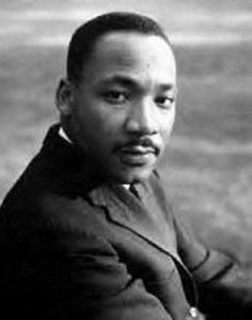
Martin Luther King Jr42819 Remembering the Dreamer

But let judgment roll down as waters, and righteousness as a mighty stream. Amos 5:24 ERV

Rev. Martin Luther King, Jr. quoted this powerful scripture in his famous I HAVE A DREAM speech. He believed God’s Word. He took his Bible, the one President Obama will place his hand upon next week, very seriously; so seriously that he repeatedly risked his life to proclaim its message of love for God and love for neighbor.

Uncle M.L., like everyone, was far from perfect; but he loved the Lord. It was God’s Word that he used to unite a movement and change our nation.

Uncle M.L. was born on January 15, 1929. In remembering him today, I can tell you that he was a kind and gentle man who was used as a strong prophet of God.

Many people called him the “Black Moses” and the “Modern Day Apostle of Love.” He was a Baptist preacher of the Gospel of Jesus Christ who was also called to lead the 20th Century Civil Rights Movement.

Dr. Martin Luther King, Jr. loved Jesus and preached His Word. His sermons such as Rediscovering Lost Values and The Death of Evil on the Seashore reflect his devotion to the Lord and his obedience to God’s call. The themes of his teachings are strongly reflective of the need of God’s love, human repentance, and forgiveness.

Dr. King was a family man. As one whose bloodline includes ancestors who were not only powerful Gospel preachers, but ex-slaves, Irish sharecroppers, educators, musicians, entrepreneurs, and civil rights leaders, we can understand and appreciate how God called Dr. King as a modern day Moses and gave him a prophetic DREAM to help set the captives free.

He and my father, Rev. A. D. King, are brothers, fallen soldiers of the 20th Century Civil Rights Movement who now reside in Heaven. Many people don’t even know that Martin had a brother and a sister. He was a beloved uncle and family member.

The year 2013 will mark several significant landmark anniversaries, including 150 years since the signing of the Emancipation Proclamation, 100 years since the formation of the Federal Reserve System, 50 years since the MLK ‘I HAVE A DREAM SPEECH’, and the 40th year landmine Supreme Court Roe v. Wade decision that legalized abortion in America. This will surely be a year of transition, and there is a need for a deep spiritual awakening. In fact, it’s time for America to wake up before the dream becomes a nightmare.

Thank God that Rev. Martin Luther King, Jr. had a dream. Happy Birthday, Uncle M. L.

Source: FULL ARTICLE at Western Journalism

In a Wartime Telegram, a Look at a Frustrated Lincoln

By hnn

One way to think of it is this: It is a page from the script for the script for “Lincoln.”

The script for the script? Historical documents and reference materials served as the basis for the movie’s script, and this is an original document, a 106-word draft of a telegram signed by Abraham Lincoln himself. So it was not polished by the writers in Hollywood.

Lincoln wrote it in May 1862, when, as the movie made clear, Lincoln was focusing on the Emancipation Proclamation. Lincoln sent the telegram — to be displayed at the Winter Antiques Show, which opens to the public on Jan. 25 at the Park Avenue Armory — in reply to a 10-page message from Maj. Gen. George B. McClellan, who has been described by one historian as Lincoln’s “never-ready” general….

Source:
NYT

Source URL:
http://cityroom.blogs.nytimes.com/2013/01/11/in-a-wartime-telegram-a-look-at-a-frustrated-lincoln/?ref=todayspaper

Date:
1-11-13

Source: FULL ARTICLE at History News Network – George Mason University

Obama Taking Oath Two Times, With Three Bibles

By Breaking News

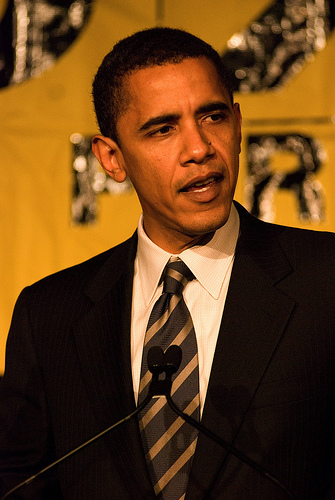
Barack Obama 10 SC Obama Taking Oath Two Times, With Three Bibles

(CNSNews.com) – Not one, but three Bibles for President Obama’s inaugural oath-taking.
On Sunday, January 20, President Obama officially will be sworn into his second term, taking the oath of office with his hand on a Bible belonging to his wife’s family.

The next day, when he takes the oath a second time as part of public inaugural ceremonies at the U.S. Capitol, Obama will place his hand on two Bibles, one stacked on the other. One of the Bibles, which belonged to President Lincoln, Obama used in 2009. The other belonged to the Rev. Dr. Martin Luther King, Jr.

Obama is being sworn in on the federal holiday devoted to King.

President Obama is honored to use these Bibles at the swearing-in ceremonies,” said Steve Kerrigan, president and CEO of the Presidential Inaugural Committee. “On the 50th anniversary of the March on Washington and 150th anniversary of the Emancipation Proclamation, this historic moment is a reflection of the extraordinary progress we’ve made as a nation.”

Read More at CNS News . By Susan Jones.

Source: FULL ARTICLE at Western Journalism

Smithsonian exhibit parallels 1863 Emancipation, 1963 Civil Rights March on Washington

By hnn

WASHINGTON — President Abraham Lincoln’s Emancipation Proclamation and Martin Luther King Jr.’s March on Washington for Civil Rights were 100 years apart, but both changed the nation and expanded freedoms.

Beginning Friday, the Smithsonian’s National Museum of African American History and Culture is presenting a walk back in time through two eras. A new exhibit, “Changing America,” parallels the 1863 emancipation of slaves with the 1963 March on Washington.

An inkwell Lincoln used to draft what would become the Emancipation Proclamation is on display on one side of the timeline, while the pen President Lyndon Johnson used to sign the Civil Rights Act is on the other….

Source:

AP

Source URL:

http://www.washingtonpost.com/lifestyle/travel/smithsonian-parallels-1863-1963-events-that-changed-america-from-emancipation-to-civil-rights/2012/12/14/303da5da-45b6-11e2-8c8f-fbebf7ccab4e_story.html

Date:

12-14-12

Source: History News Network – George Mason University