Tag Archives: Demilitarized Zone

Last groups of South Koreans leave shuttered North Korean factory

The final group of South Koreans working in a shuttered factory park in North Korea is expected to leave Monday after their government ordered them to leave the border city, as Pyongyang issued a new threat to shut down the last symbol of detente.

The group will follow a similar group that left Saturday after stuffing their cars with as much as they could take from their factories in the North Korean city of Kaesong, located just on the other side of the Demilitarized Zone dividing the two Koreas.

A total of 125 South Koreans left Saturday, and the last 50, including those who manage the facilities, will leave Monday, the Unification Ministry said.

Once the last South Koreans leave, what will become of the jointly run factory park remains unclear.

“It is only a matter of time” before the complex shuts down for good, an unnamed spokesman for North Korea‘s General Bureau for Central Guidance said Saturday. “We treasure the Kaesong industrial complex but won’t bestow favors on those who return evil for good.”

Until earlier this month, 53,000 North Korean workers were managed by 800 South Koreans at more than 120 South Korean-run factories in a special economic zone in Kaesong. The decade-old arrangement provided Kaesong with work and salaries, and the South Koreans with cheap labor.

But as tensions flared between Seoul and Pyongyang over North Korea‘s nuclear ambitions, joint U.S.-South Korean military drills and other perceived slights, Pyongyang pulled its entire work force out on April 9 and banned South Koreans from crossing the border to bring food and supplies.

With factories suspending operations and food supplies dwindling, Seoul issued a Friday deadline for North Korea to agree to talks on Kaesong.

After Pyongyang dismissed the call as an insufficient show of sincerity, Ryoo Kihl-jae, South Korea‘s top official on relations with North Korea, announced that Seoul would pull the rest of the South Koreans from Kaesong out of concern for their safety.

Han Jae-kwon, head of the association of South Koreans managing factories in Kaesong, expressed regret that the government made the decision without notifying them first. Speaking in front of businessmen running factories in Kaesong, he called on Seoul to continue to pursue dialogue with Pyongyang over the industrial park.

“I came down for the time being with the hope that the Kaesong industrial complex would reopen later,” Lee Byung-yun, a South Korean worker, said after crossing the border on Saturday.

Dozens of cars, many of them covered with cargo from hood to trunk, lined up at a checkpoint to enter South Korea after arriving from the North across the heavily fortified border between the two countries.

The park, which broke ground in 2003, is the last joint Korean project left from a previous era of reconciliation. Other projects, including tours to a scenic mountain in North Korea and to downtown Kaesong, were suspended in recent years.

However, Lee Hochul, a political science professor at Incheon National University in South Korea, noted that neither side has decided to permanently shut down the industrial complex.

“This is a war

Source: FULL ARTICLE at Fox World News

Last groups of SKoreans leaving NKorean factory

Regret etched on their faces, the last groups of South Korean managers began pulling out Saturday from a shuttered factory park in North Korea after their government ordered them to leave the border city.

The South Koreans stuffed their cars with as much as they could take from their factories in the North Korean city of Kaesong, located just on the other side of the Demilitarized Zone dividing the two Koreas. A total of 125 South Koreans left Saturday, and the last 50, including government employees managing facilities, will leave Monday, the Unification Ministry said.

Once the last South Koreans leave, what will become of the jointly run factory park remains unclear.

Until earlier this month, 53,000 North Korean workers were managed by 800 South Koreans at more than 120 South Korean-run factories in a special economic zone in Kaesong. The decade-old arrangement provided Kaesong with work and salaries, and the South Koreans with cheap labor.

But as tensions flared between Seoul and Pyongyang over North Korea‘s nuclear ambitions, joint U.S.-South Korean military drills and other perceived slights, Pyongyang pulled its entire work force out on April 9 and banned South Koreans from crossing the border to bring food and supplies.

With factories suspending operations and food supplies dwindling, Seoul issued a Friday deadline for North Korea to agree to talks on Kaesong.

After Pyongyang dismissed the call as an insufficient show of sincerity, Ryoo Kihl-jae, South Korea‘s top official on relations with North Korea, announced that Seoul would pull the rest of the South Koreans from Kaesong out of concern for their safety.

Han Jae-kwon, head of the association of South Koreans managing factories in Kaesong, expressed regret that the government made the decision without notifying them first. Speaking in front of businessmen running factories in Kaesong, he called on Seoul to continue to pursue dialogue with Pyongyang over the industrial park.

“I came down for the time being with the hope that the Kaesong industrial complex would reopen later,” Lee Byung-yun, a South Korean worker, said after crossing the border on Saturday. Park Yun-kyu, head of a factory in Kaesong, told reporters he had no choice but to pull his staff out in the face of a government call to leave Kaesong.

Dozens of cars, many of them covered with cargo

Source: FULL ARTICLE at Fox World News
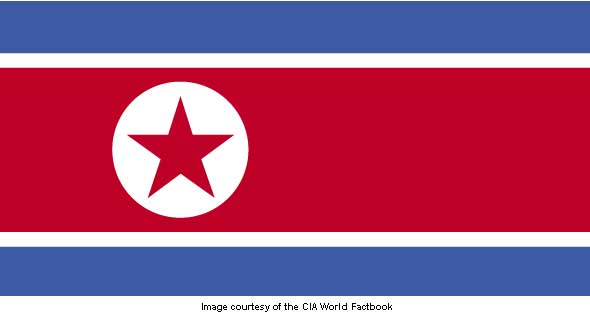
North Korea rejects South Korea's calls for talks

North Korea on Sunday rebuffed a South Korean proposal to resolve rising tensions through dialogue, dismissing it as a “crafty trick” by its rival.

Tensions have been high on the Korean Peninsula for weeks, with Pyongyang threatening to attack Seoul and Washington for conducting joint military drills and for supporting U.N. sanctions imposed on North Korea for a February nuclear test.

While the threats are largely seen as rhetoric, U.S. and South Korean officials have said they believe North Korea may test-fire a mid-range missile designed to reach the U.S. territory of Guam.

Pyongyang also took a direct shot at Seoul by pulling more than 50,000 North Korean workers from their joint factory park in the border city of Kaesong and denying South Koreans access to the complex just north of the Demilitarized Zone.

The move has brought the South Korean-run factories to a standstill, threatening a shutdown of the last joint project left between the two Koreas.

Last Thursday, Seoul pressed Pyongyang to discuss restarting operations at the factory park. South Korean President Park Geun-hye has promoted seeking peace with North Korea, a change in policy from the hard-line stance of her predecessor, Lee Myung-bak.

But on Sunday, North Korea‘s Committee for the Peaceful Reunification of Korea said Pyongyang has no intention of talking with Seoul unless it abandons its confrontational posture.

South Korea‘s presidential Blue House said North Korea‘s rebuttal of its dialogue offer was “very regrettable.” A Blue House statement urged North Korea to take responsible measures to help relieve difficulties facing South Koreans working at the joint factory park.

The two Koreas technically remain at war because their 1950-53 conflict ended with an armistice, not a peace treaty. The U.S. keeps about 28,500 troops in South Korea to help deter potential aggression by the North.

From: http://feeds.foxnews.com/~r/foxnews/world/~3/Q11mCnOaH24/

Factories that ran on Korean cooperation go silent

A factory complex that is North Korea‘s last major economic link with South Korea was a virtual ghost town Tuesday after Pyongyang suspended its operations and recalled all 53,000 of its workers as part of its recent war-like posturing.

The work stoppage at the Kaesong industrial complex, the biggest employer in the North’s third-biggest city and a source of much-needed hard currency, shows that Pyongyang is willing to hurt its own shaky economy in order to display its anger with South Korea and the United States.

Only a few hundred South Korean managers remained at the facility, which has been run for the past decade with cheap North Korean labor and South Korean capital and know-how. The managers have not been forced to leave the complex, located just north of the Demilitarized Zone.

One manager said that he and his colleagues are subsisting on instant noodles but planned to stay and watch over company equipment as long as their food lasted. Some of those who chose to leave were seen departing in cars overloaded with finished products.

The pull-out is part of a torrent of provocations and threats Pyongyang has unleashed at Seoul and Washington in recent weeks. The North is angry at U.N. sanctions punishing it for its third nuclear test on Feb. 12, as well as joint military exercises between the U.S. and South Korea that the allies call routine but that Pyongyang sees as preparation for an invasion.

In what’s seen as the latest attempt to stoke fear, North Korea on Tuesday urged all foreign companies and tourists in South Korea to evacuate because it says the rival Koreas are on the verge of nuclear war. Analysts see a direct attack on Seoul as extremely unlikely.

South Korean President Park Geun-hye, who has sought to re-engage North Korea with dialogue and aid since taking office in February, expressed exasperation Tuesday with what she called the “endless vicious cycle” of Seoul answering Pyongyang’s hostile behavior with compromise, only to get more hostility.

U.S. and South Korean defense officials have said they’ve seen nothing to indicate that Pyongyang is preparing for a major military action. But they have raised their defense postures, and so has Japan, which deployed PAC-3 missile interceptors in key locations around Tokyo on Tuesday as a precaution against possible North Korean ballistic missile tests.

Analysts say North Korea‘s rhetoric and actions …read more

Source: FULL ARTICLE at Fox World News

S. Korea confirms N. Korea workers not showing up at factory

North Korean workers didn’t show up for work at a jointly run factory complex with South Korea on Tuesday, a day after Pyongyang suspended operations at the last remaining major economic link between rivals locked in an increasingly hostile relationship.

Some of the more than 400 South Korean managers still at the Kaesong industrial complex just north of the Demilitarized Zone said they planned to stay and watch over their equipment until food ran out.

Pyongyang said Monday it would pull out its 53,000 workers at the complex, which began production in 2004 and is the biggest employer in the North’s third-biggest city. By closing the factory, Pyongyang is showing it is willing to hurt its own shaky economy in order to display its anger with South Korea and the United States.

Pyongyang has unleashed a torrent of threats at Seoul and Washington following U.N. sanctions punishing the North for its third nuclear test, on Feb. 12, and joint military exercises between the U.S. and South Korea that allies call routine but that Pyongyang sees as invasion preparation. In recent days there have also been worries in Seoul of an even larger provocation from Pyongyang, including another possible nuclear test or rocket launch.

Some North Koreans who worked an overnight shift at Kaesong were still there Tuesday morning, but South Koreans said those scheduled for day shifts didn’t show. A North Korean woman at Kaesong said in a telephone call that she planned to return home now that her night shift was done.

A South Korean worker who remained at Kaesong said that workers normally show up around 8 or 8:30 a.m. “They did not show up,” said the worker, who declined to be identified because he was not authorized to speak to the media.

The worker said he planned to stay at the factory until food runs out. He said he and four other colleagues had been living on instant noodles. “We haven’t had any rice since last night. I miss rice,” he said Tuesday morning. “We are running out of food. We will stay here until we run out of ramen.”

He said he and his colleagues are getting news about Kaesong through South Korean television. There is no Internet connection at Kaesong.

The point of North Korea‘s threats and possible future provocations, analysts say, isn’t a full-scale war, which North Korea would certainly lose. It’s seen instead as an effort to force new, Pyongyang-friendly policies in South Korea and Washington and to boost domestic loyalty for Kim Jong Un, the country’s young, still relatively untested new leader.

Monday’s statement about Kaesong came from Kim Yang Gon, secretary of the Central Committee of the Workers’ Party of Korea. It did not say what would happen to the 475 South Korean managers still at the Kaesong industrial complex.

Kim’s statement said North Korea will now consider whether to close the complex permanently. “How the situation will develop in the days ahead will entirely depend on the attitude” of South Korean authorities, it said.

Yoo Ho-yeol, a North Korea expert at …read more

Source: FULL ARTICLE at Fox World News

N. Korea Threat May Be More Bark Than Bite

By Breaking News

North Korea flag SC N. Korea threat may be more bark than bite

SEOUL, South Korea — Across North Korea, soldiers are gearing up for battle and shrouding their jeeps and vans with camouflage netting. Newly painted signboards and posters call for “death to the U.S. imperialists” and urge the people to fight with “arms, not words.”

But even as North Korean leader Kim Jong Un is issuing midnight battle cries to his generals to ready their rockets, he and his million-man army know full well that a successful missile strike on U.S. targets would be suicide for the outnumbered, out-powered North Korean regime.

Despite the hastening drumbeat of warfare — seemingly bringing the region to the very brink of conflict with threats and provocations — Pyongyang aims to force Washington to the negotiating table, pressure the new president in Seoul to change policy on North Korea, and build unity inside the communist country without triggering a full-blown war.

North Korea wants to draw attention to the tenuousness of the armistice designed to maintain peace on the Korean Peninsula, a truce Pyongyang recently announced it would no longer honor as it warned that war could break out at any time.

In July, it will be 60 years since North Korea and China signed an armistice with the U.S. and the United Nations to bring an end to three years of fighting that cost millions of lives. The designated Demilitarized Zone has evolved into the most heavily guarded border in the world.

Read more at Official Wire. By Jean H. Lee.

…read more
Source: FULL ARTICLE at Western Journalism

North Korean leader vows to move ahead with nuclear test

North Korean leader Kim Jong Un convened top security and foreign affairs officials and ordered them to take “substantial and high-profile important state measures,” state media said Sunday, indicating that he plans to push forward with a threat to explode a nuclear device in defiance of the United Nations.

The meeting of top officials led by Kim makes clear that he backs Pyongyang’s defiant stance in protest of U.N. Security Council punishment for a December rocket launch. The dispatch in the official Korean Central News Agency did not say when the meeting took place.

Last week, the Security Council condemned North Korea‘s Dec. 12 launch of a long-range rocket as a violation of a ban against nuclear and missile activity. The council, including North Korea ally China, punished Pyongyang with more sanctions and ordered the regime to refrain from a nuclear test — or face “significant action.”

North Korea responded by rejecting the resolution and maintaining its right to launch a satellite into orbit as part of a peaceful civilian space program.

It also warned that it would keep developing rockets and testing nuclear devices to counter what it sees as U.S. hostility. A rare statement was issued Thursday by the powerful National Defense Commission, the top governing body led by Kim.

Kim’s order for strong action and the recent series of strong statements indicate he intends to conduct a nuclear test in the near future to show “he is a young yet powerful leader both domestically and internationally,” said Chin Hee-gwan, a North Korea expert at South Korea‘s Inje University.

North Korea cites a U.S. military threat in the region as a key reason behind its drive to build nuclear weapons. The two countries fought on opposite sides of the Korean War, which ended after three years in 1953 with an armistice, not a peace treaty. The U.S.-led U.N. Command mans the Demilitarized Zone dividing the two Koreas, and Washington stations more than 28,000 troops in South Korea to protect its ally.

North Korea is estimated to have enough weaponized plutonium for four to eight bombs, according to American nuclear scientist Siegfried Hecker, who visited the country’s nuclear complex northwest of Pyongyang in November 2010.

However, it is not known whether North Korean scientists have found a way to build nuclear warheads small enough to mount on a long-range missile.

Experts say regular tests are needed to perfect the technique, and another atomic test could take the country closer to its goal of building a warhead that can be mounted on a missile designed to strike the United States. North Korea has carried out two nuclear tests, in 2006 and 2009.

South Korean defense officials say North Korea is technically ready to conduct a nuclear test in a matter of days.

Satellite photos taken Wednesday show that over the past month, roads have been kept clear of snow and that North Koreans may have been sealing the tunnel into a mountainside where a nuclear device would be detonated.

Analysis of the images of the Punggye-ri site was provided Friday to The Associated Press by 38 North, the website of the U.S.-Korea Institute at Johns Hopkins School of Advanced International Studies.

Kim could order a nuclear test ahead of the Feb. 16th birthday of his late father and former leader Kim Jong Il to “create a festive mood,” Chin predicted. Kim Jong Il died at age 69 in December 2011.

The U.S., South Korea and other countries have warned North Korea not to go ahead with a nuclear test, saying that would only deepen the country’s international isolation.

After meeting with Chinese officials Friday, U.S. envoy for North Korea Glyn Davies said a nuclear test would set back efforts to restart regional talks on the North’s nuclear disarmament.

North Korea has accused the U.S. and South Korea of leading the push for the U.N. Security Council resolution.

Sunday’s KCNA dispatch said the U.N. punishment indicates U.S. hostility toward North Korea has reached its highest point. North Korea also warned South Korea on Friday of “strong physical countermeasures” if Seoul takes part in the U.N. sanctions.

Source: FULL ARTICLE at Fox World News

North Korean leader vows strong action

North Korean leader Kim Jong Un convened top security and foreign affairs officials and ordered them to take “substantial and high-profile important state measures,” state media said Sunday, indicating that he plans to push forward with a threat to explode a nuclear device in defiance of the United Nations.

The meeting of top officials led by Kim makes clear that he backs Pyongyang’s defiant stance in protest of U.N. Security Council punishment for a December rocket launch. The dispatch in the official Korean Central News Agency did not say when the meeting took place.

Last week, the Security Council condemned North Korea‘s Dec. 12 launch of a long-range rocket as a violation of a ban against nuclear and missile activity. The council, including North Korea ally China, punished Pyongyang with more sanctions and ordered the regime to refrain from a nuclear test — or face “significant action.”

North Korea responded by rejecting the resolution and maintaining its right to launch a satellite into orbit as part of a peaceful civilian space program.

It also warned that it would keep developing rockets and testing nuclear devices to counter what it sees as U.S. hostility. A rare statement was issued Thursday by the powerful National Defense Commission, the top governing body led by Kim.

North Korea cites a U.S. military threat in the region as a key reason behind its drive to build nuclear weapons. The two countries fought on opposite sides of the Korean War, which ended after three years in 1953 with an armistice, not a peace treaty. The U.S.-led U.N. Command mans the Demilitarized Zone dividing the two Koreas, and Washington stations more than 28,000 troops in South Korea to protect its ally.

North Korea is estimated to have enough weaponized plutonium for four to eight bombs, according to American nuclear scientist Siegfried Hecker, who visited the country’s nuclear complex northwest of Pyongyang in November 2010.

However, it is not known whether North Korean scientists have found a way to build nuclear warheads small enough to mount on a long-range missile.

Experts say regular tests are needed to perfect the technique, and another atomic test could take the country closer to its goal of building a warhead that can be mounted on a missile designed to strike the United States. North Korea has carried out two nuclear tests, in 2006 and 2009.

South Korean defense officials say North Korea is technically ready to conduct a nuclear test in a matter of days.

Satellite photos taken Wednesday show that over the past month, roads have been kept clear of snow and that North Koreans may have been sealing the tunnel into a mountainside where a nuclear device would be detonated.

Analysis of the images of the Punggye-ri site was provided Friday to The Associated Press by 38 North, the website of the U.S.-Korea Institute at Johns Hopkins School of Advanced International Studies.

The U.S., South Korea and other countries have warned North Korea not to go ahead with a nuclear test, saying that would only deepen the country’s international isolation.

After meeting with Chinese officials Friday, U.S. envoy for North Korea Glyn Davies said a nuclear test would set back efforts to restart regional talks on the North’s nuclear disarmament.

Source: FULL ARTICLE at Fox World News