Tag Archives: Smith Barney

Hacking Freelancer Freedom

By Marissa Feinberg, Contributor

Today, at the largest FinTech Hackathon in the world with leaders such as Sallie Krawcheck, former head of Merril Lynch, Smith Barney and Matt Turck, FirstMark Capital judging the teams.  Project Freedom is a movement that started at the FinTech Hackathon to save freelancers from a painful tax season. Project Freedom started because the FinTech Hackathon is looking for real solutions to financial problems.  Freelancers and business owners alike are suffering because 1099s are painfully complicated and the tax audits that result from them are terrifying. Project Freedom keeps track of freelancer W9s to securely send their employers.  The IRS delivered more than $5 billion in refund checks to fraudulent tax returns for 2011 because of identity fraudProject Freedom prevents freelancers from falling into the same fate by securing their W9 tax information. Other benefits that the project is providing for free to Freelancers are: …read more

Source: FULL ARTICLE at Forbes Latest

How Morgan Stanley's Fed-Approved Plan Will Pay Out

By Jessica Alling, The Motley Fool

Source:  Dodd-Frank Act Stress Test 2013: Supervisory Stress Test Methodology and Results.

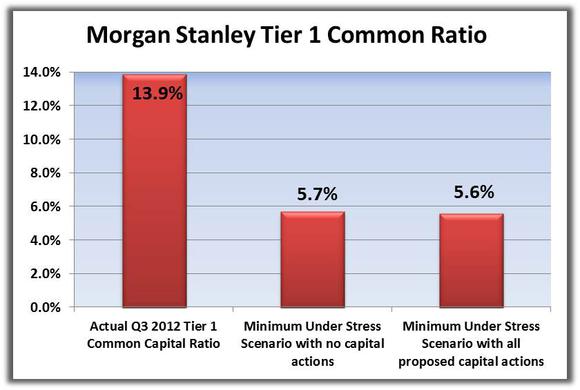
Even with the potential cash outflow of $4.7 billion, Morgan Stanley‘s Tier 1 common ratio was only reduced by 0.1% under the Fed’s stressed scenarios. This is a great showing for Morgan Stanely, especially after both Goldman and JPM were required to submit further plans to correct weaknesses in their capital plans that were “significant enough to require immediate action.” So far in after-hours trading, Morgan Stanley is up 2%.

Moving forward
So, with no objections to its capital plans, Morgan Stanley can get to work.

Source: Dodd-Frank Act Stress Test 2013: Supervisory Stress Test Methodology and Results.

The next step toward its full ownership of Smith Barney could initiate as soon as next month, propelling Morgan Stanley further along its path to becoming the top-notch wealth manager it has aimed to be. With the addition of the remaining Smith Barney ownership, Morgan Stanley‘s revenues will be bolstered, allowing the bank to provide valuable capital to its shareholders at a later date. Though investors are not getting an immediate payout, some may be disappointed — but Morgan Stanley‘s plan is truly aimed at adding great value for long-term investors looking for growth.

The other side of investment banking
As mentioned above, some investment-heavy banks weren’t as happy with the Fed’s results as Morgan Stanley. With weaknesses highlighted in its capital plan, how with Goldman Sachs fare going forward? 

To help you figure out 

Filed under:

The release of the Fed’s second Comprehensive Capital Analysis and Review test was a positive note for investment bank Morgan Stanley . Though the bank had a small margin to work with following the initial round of stress tests, it received no objections to its 2013 capital plan. Some of Morgan Stanley‘s closest rivals did not receive the same confidence, so let’s take a look at MS‘s results, how it stacked up, and where it goes from here.

The results
As noted in the preview to this week’s results, Morgan Stanley had one of the lower Tier 1 common capital ratios under the Fed’s stressed scenarios, but its results had been expected since it does not operate the same large depository arms as rival JPMorgan Chase  does. Both Morgan and Goldman Sachs were largely more affected by the negative scenarios designed by the Fed, but both passed the initial round.

On to round two. Morgan Stanley submitted its 2013 capital plan, which closely mirrored its 2012 plan and included the cash acquisition of Citigroup‘s remaining 35% stake in Smith Barney. The $4.7 billion acquisition is still subject to further regulatory approval, but the bank’s second round test results will not stand in its way.

Source:  Dodd-Frank Act Stress Test 2013: Supervisory Stress Test Methodology and Results.

Even with the potential cash outflow of $4.7 billion, Morgan Stanley‘s Tier 1 common ratio was only reduced by 0.1% under the Fed’s stressed scenarios. This is a great showing for Morgan Stanely, especially after both Goldman and JPM were required to submit further plans to correct weaknesses in their capital plans that were “significant enough to require immediate action.” So far in after-hours trading, Morgan Stanley is up 2%.

Moving forward
So, with no objections to its capital plans, Morgan Stanley can get to work.

Source: Dodd-Frank Act Stress Test 2013: Supervisory Stress Test Methodology and Results.

The next step toward its full ownership of Smith Barney could initiate as soon as next month, propelling Morgan Stanley further along its path to becoming the top-notch wealth manager it has aimed to be. With the addition of the remaining Smith Barney ownership, Morgan Stanley‘s revenues will be bolstered, allowing the bank to provide valuable capital to its shareholders at a later date. Though investors are not getting an immediate payout, some may be disappointed — but Morgan Stanley‘s plan is truly aimed at adding great value for long-term investors looking for growth.

The other side of investment banking
As mentioned above, some investment-heavy banks weren’t as happy with the Fed’s results as Morgan Stanley. With weaknesses highlighted in its capital plan, how with Goldman Sachs fare going forward? 

To help you figure out whether Goldman Sachs is a buy today, I invite you to read our premium research report on the company. Click here now for instant access!

…read more
Source: FULL ARTICLE at DailyFinance

Why Morgan Stanley Shouldn't Pay Its Shareholders

By Jessica Alling, The Motley Fool

Source:  Dodd-Frank Act Stress Test 2013: Supervisory Stress Test Methodology and Results.

Should Morgan Stanley ask for a dividend increase or share buyback?
In short, no. While the bank does have some room before it’s Tier 1 common capital ratio reaches the Fed’s 5% minimum, any dividend increase or share buyback would not be substantial enough to make a big difference for its investors. With its current payout of 0.2%, Morgan Stanley will have no problem getting its current dividend approved by the Fed, and though that may not be appreciated by investors now, it has another opportunity to use its capital for another purpose that can potentially add much more value.

Taking a cue from last year’s capital plan, Morgan Stanley should avoid increasing its dividend or initiating share buyback programs in favor of escalating its acquisition of Morgan Stanley Smith Barney. The joint venture with Citigroup has already bolstered Morgan Stanley‘s operations with increased exposure to wealth management. The bank currently has an agreement with Citi that it will purchase the remaining 35% stake in Smith Barney by 2015.

Not only has the purchase of Smith Barney provided increased revenue to Morgan Stanley, but the acquisition price is heavily favoring the purchaser — giving ample opportunity for MS to realize increased gains from the purchase.

If not now, when?
Once Morgan Stanley has some more breathing room under stress test conditions, and has made substantial progress on purchasing the remainder of Smith Barney, it should request authorization to increase its dividend and/or share buybacks. The bank would be serving its shareholder’s long-term interests by putting off capital distributions in favor of the acquisition that places it firmly in the wealth management sphere — a direction Morgan Stanley is favoring.

But once Smith Barney is largely owned by Morgan Stanley, and integrated into the bank’s operations, its investors deserve a capital boost from the paltry level of distributions they receive now.

Morgan Stanley isn’t the only investment bank that got the short end of the Fed’s CCAR stick — but like MS, Goldman Sachs fared well regardless.

With big finance firms still trading at deep discounts to their historic norms, investors everywhere are wondering if this is the new normal, or if finance stocks are a screaming buy today. The answer depends on the company, so to help figure out 

Filed under:

Last week’s release from the Federal Reserve from part one of its Comprehensive Capital Analysis and Review (aka, stress tests) was a big day for the nation’s banks. But tomorrow may be even bigger for bank investors. Most are anticipating signs of increased dividends or share buybacks, but Morgan Stanley investors may be waiting a bit longer.

A quick recap
Morgan Stanley‘s results last week weren’t bad, but also not the greatest. Though the bank had an admirable 13.9% Tier 1 common ratio, the Fed’s stressed scenario reduced the ratio by a huge 8.2%. Because Morgan Stanley and its compatriot Goldman Sachs operations are vastly different from the large depository institutions with trading arms, like Bank of America and JPMorgan Chase, the Fed’s stress test produced harsher effects for the investment banks.

But despite the larger effects, Morgan Stanley passed the first round of tests, and may have some wiggle room in the second round.

Source:  Dodd-Frank Act Stress Test 2013: Supervisory Stress Test Methodology and Results.

Should Morgan Stanley ask for a dividend increase or share buyback?
In short, no. While the bank does have some room before it’s Tier 1 common capital ratio reaches the Fed’s 5% minimum, any dividend increase or share buyback would not be substantial enough to make a big difference for its investors. With its current payout of 0.2%, Morgan Stanley will have no problem getting its current dividend approved by the Fed, and though that may not be appreciated by investors now, it has another opportunity to use its capital for another purpose that can potentially add much more value.

Taking a cue from last year’s capital plan, Morgan Stanley should avoid increasing its dividend or initiating share buyback programs in favor of escalating its acquisition of Morgan Stanley Smith Barney. The joint venture with Citigroup has already bolstered Morgan Stanley‘s operations with increased exposure to wealth management. The bank currently has an agreement with Citi that it will purchase the remaining 35% stake in Smith Barney by 2015.

Not only has the purchase of Smith Barney provided increased revenue to Morgan Stanley, but the acquisition price is heavily favoring the purchaser — giving ample opportunity for MS to realize increased gains from the purchase.

If not now, when?
Once Morgan Stanley has some more breathing room under stress test conditions, and has made substantial progress on purchasing the remainder of Smith Barney, it should request authorization to increase its dividend and/or share buybacks. The bank would be serving its shareholder’s long-term interests by putting off capital distributions in favor of the acquisition that places it firmly in the wealth management sphere — a direction Morgan Stanley is favoring.

But once Smith Barney is largely owned by Morgan Stanley, and integrated into the bank’s operations, its investors deserve a capital boost from the paltry level of distributions they receive now.

Morgan Stanley isn’t the only investment bank that …read more
Source: FULL ARTICLE at DailyFinance