Tag Archives: Q3 Tier

Here's How Goldman Sachs Fared in the Stress Tests

By David Hanson, The Motley Fool
Filed under:

Yesterday, the release of the results from the Federal Reserve’s annual stress tests highlighted the impact of the changing regulatory and operating environment on firms like Goldman Sachs and Morgan Stanley.

While these capital markets-focused firms undergo the same tests as the large depository institutions like Bank of America and Wells Fargo, investors cannot use these stress tests results as an apples-to-apples comparison for these bank holding companies.

Ranging from high to low
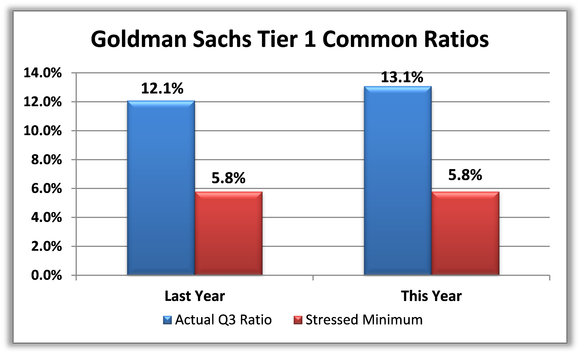
Despite posting strong operational results through 2012, Goldman Sachs entered this year’s stress tests with a very similar capital position compared to last year. The megainvestment bank increased its Q3 Tier 1 common ratio 100 basis to 13.1% in the 2012. The main purpose of the Fed’s stress tests is to examine the how these institutions would fare if the domestic and global economy experienced another scenario similar to 2008 and 2009. In the “severely adverse” economic scenario, which included a sharp contraction in Europe and developing Asian markets, Goldman’s Tier 1 common ratio crippled to a minimum of 5.8%, the same levels it fell to in last year’s tests.

Sources: Dodd-Frank Act Stress Test 2013: Supervisory Stress Test Methodology and Results. Comprehensive Capital Analysis and Review 2012.

Risky business
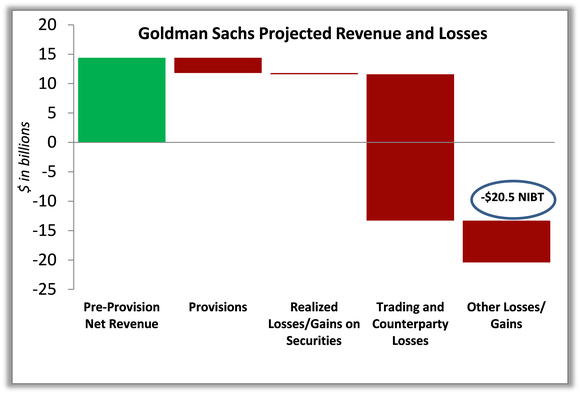
The six bank holding companies with significant trading operations, including Goldman, were subject to scenarios that exposed additional counterparty risk and markdowns on assets. The Fed’s scenario projected Goldman’s performance over a nine-quarter period and projected a total loss of over $20 billion under the severely adverse conditions. While this additional stressor negatively impacts the behemoths with trading arms like JPMorgan Chase and Bank of America, the firms without large consumer bases are likely to feel this impact to a greater extent.
Source: Dodd-Frank Act Stress Test 2013: Supervisory Stress Test Methodology and Results

Another increase?
Despite the drastic deterioration of capital levels in the Fed’s doomsday scenario, investors should note that although Goldman posted similarly depressed capital levels last year, the stock more than doubled the return of the S&P 500 since the release of the previous stress tests. In 2012, Goldman Sachs increased its dividend for the first time since 2005, despite the stress tests’ results. Next Thursday, the Fed will release Comprehensive Capital Analysis and Review (CCAR) results, which will look very similar to these results but will take into consideration any of Goldman’s proposed increases in dividends or share repurchases.

With big finance firms still trading at deep discounts to their historic norms, investors everywhere are wondering if this is the new normal, or whether finance stocks are a screaming buy today. The answer depends on the company, so to help figure out whether Goldman Sachs is a buy today, I invite you to read our premium research report on the company. Click here now for instant access!

…read more
Source: FULL ARTICLE at DailyFinance

Here's How Morgan Stanley Fared in the Stress Tests

By David Hanson, The Motley Fool

Filed under:

Yesterday, the release of the results from the Federal Reserve‘s annual stress tests highlighted the impact of the changing regulatory and operating environment on firms like Morgan Stanley and Goldman Sachs.

While these capital markets-focused firms undergo the same assessments as the large depository institutions with trading arms like JPMorgan Chase and Bank of America, the instability of the business segments that rely on the activity of institutional clients results in more volatile capital ratios during turbulent times.

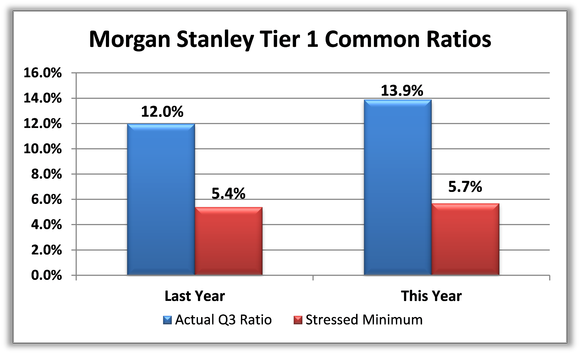
Despite a slightly tarnished reputation and sharp decline in its trading business year over year, Morgan Stanley entered this year’s stress tests with an even stronger capital position compared to last year. The investment bank increased its Q3 Tier 1 common ratio 190 basis to 13.9% in the 2012.

Although posting strong actual ratios is favorable, the main purpose of the Fed’s stress tests is to examine the how these institutions would fare if the domestic and global economy experienced another crisis similar to what happened in 2008. In the “severely adverse” economic scenario, which included a sharp contraction in Europe and developing Asian market, Morgan Stanley‘s Tier 1 common ratio crippled to 5.7%, only 30 basis points better than last year’s tests.

Sources: Dodd-Frank Act Stress Test 2013: Supervisory Stress Test Methodology and Results. Comprehensive Capital Analysis and Review 2012

The six bank holding companies with significant trading operations, including Morgan Stanley, were subject to scenarios that exposed additional counterparty risk and markdowns on assets. While this additional stressor negatively impacts the behemoths with trading arms like JPMorgan Chase and Bank of America, the firms without large consumer bases are likely to feel this impact to a greater extent. The Fed’s doomsday scenario projected Morgan Stanley‘s performance over a nine-quarter period with a total loss of almost $20 billion under the severely adverse conditions.

Source: Dodd-Frank Act Stress Test 2013: Supervisory Stress Test Methodology and Results.

Despite the drastic deterioration of capital levels in the Fed’s harshest scenario, investors should note that although Morgan Stanley posted similarly depressed capital levels last year, the stock still beat the return of the S&P 500 since the release of the previous stress tests.

Next Thursday, the Fed will release Comprehensive Capital Analysis and Review (CCAR) results which will look very similar to these results but will take into consideration any potential proposed increases in dividends or share repurchases. Last year, Morgan Stanley did not request to increase its dividend, and given the performance of its market-based businesses in 2012 and stress test results, shareholders may not be expecting this year to be any different.

With big finance firms still trading at deep discounts to their historic norms, investors everywhere are wondering if this is the new normal, or whether finance stocks are a screaming buy today. The answer depends on the company, so to help figure out whether big-baking fellow Goldman Sachs is a buy today, I invite you to read our premium research report on the company. Click …read more
Source: FULL ARTICLE at DailyFinance