Tag Archives: Collaboration Summit

My Linux Foundation Collaboration Summit Picks and Details on Live Video Access to Keynotes

By amcpherson

For The Linux Foundation, April is not the cruelest month: it’s one of the busiest. Every year, we hold our Collaboration Summit in mid-April to bring together our members, Linux and open source community developers, open source legal minds, and large scale Linux and open source users in an intimate setting. Even as The Linux Foundation has expanded its event lineup to include LinuxCon, CloudOpen, Automotive Linux Summits, and more throughout the world, this remains our original event, and because of that, as well as it’s small size and unique format, it’s special to many of us in the community.

As we prepare I wanted to share some of my top picks for speakers and sessions, as well as remind everyone who can’t join us this year that you can watch the day 1 keynotes for free via live video stream. Just sign up on the Events website.

My picks include:

* Automotive crowd sourcing, presented by Jaguar Land Rover‘s Matt Jones. Not only will Matt be speaking about how we can open up the software design process for in-vehicle infotainment, but there will also be a Jaguar Land Rover on display at the event that includes a Linux-based infotainment system.

* Adapteva CEO Andreas Olofsson will talk about how Kickstarter helped them create the $99 supercomputer, the Parallela Project, and how that works is transitioning parallel computing through open hardware. You can get more of a sense for Andreas and his perspectives in this recap of his recent LiveLinuxQA on Twitter.

* Collaborative Projects panel. This panel will include community leadership from a variety of the Collaborative Projects we host here at The Linux Foundation. Projects represented on the panel include Yocto Project, OpenMAMA and a special guest to be announced onsite.

* Netflix’ Adrian Cockcroft, director of architecture and cloud systems, will share how the company is using Linux and managing cloud services for one of the most highly-consumed services today. He will also detail Netflix’ cloud platform. Should be interesting.

* Jon Corbet will present the latest Linux Weather Forecast. This is a “don’t miss.” Jon’s presentations are always entertaining and thorough. If you want to know what’s taking shaping in the Linux kernel, this is the keynote to attend.

I’d also encourage people to drop into a variety of the sessions on days 2 and 3. I’m especially looking forward to GNOME’s Karen Sandler on bringing more women to free and open source software; Creative Commons’ Mike Linkvayer on “Software Eats the World;” and Red Hat‘s session on persistent memory for Linux for new storage technologies and interfaces.

You can view the complete Collaboration Summit schedule to see what else you might want to check out next week online or onsite.

Lastly, we’ll be hosting a Xen Project birthday party Monday night at the Julia Morgan Ballroom from 6 p.m. –

From: http://www.linuxfoundation.org/news-media/blogs/browse/2013/04/my-linux-foundation-collaboration-summit-picks-and-details-live

Jon Corbet Mulls Linux Kernel Changes

By libbyclark

Now that the Linux kernel 3.9 merge window is closed, it’s safe to say we know what features will be included in the next kernel release. What lies beyond is predictable, still, but will likely hold a surprise or two. That’s where the annual Linux kernel weather report comes in.

Delivered by Linux kernel contributor and LWN.net co-founder Jon Corbet at Collaboration Summit in San Francisco April 15-17, the forecast will help prepare the Linux community for the year ahead.

In this Q&A, Corbet gives us a preview of his talk, reveals some kernel changes that surprised him last year, and discusses some of the biggest challenges kernel developers face in the months and years ahead.

What changes to the kernel over the past year have surprised you?

I do try not to be surprised by kernel changes – it’s my job to be on top of that stuff, after all 🙂

One of my biggest surprises, I guess, was when I realized that the Android developers had dropped their wakelock/suspend blocker implementation in favor of the solution that had been merged into the mainline kernel. A long-running, high-profile, bitter fight had been resolved quietly with almost nobody even noticing, and one of the biggest differences between the Android and mainline kernels is no more. A lot of credit is due to the developers in both the Android and mainline communities for their hard work in creating a solution that is acceptable to everybody involved.

Another surprise is the speed with which the bufferbloat problem has been brought under control. With a relatively small number of changes, many of the over-buffering problems in the Linux kernel were taken care of, to the point that the problem is pretty well solved for wired Ethernet networking. There is, of course, still a lot of work yet to be done, especially with wireless networking.

What features will we find in the 3.9 kernel?

We’ll get support for the ARC and Metag processor architectures. The “dm-crypt” subsystem enables the use of a fast (solid-state) drive as a front-end cache for slower storage. The ARM architecture now supports virtualization with KVM. User namespaces now work with almost all filesystems, making it possible to enable this feature in almost any kernel (though that may not yet be a wise thing to do).

What other new features are coming down the pike this year? 

Some of the more interesting work on the horizon may be the various solutions to the problem of scheduling on ARM big.LITTLE systems. The Linux scheduler was never written with asymmetric processors in mind, so it currently does not know how to schedule tasks to take advantage of the big.LITTLE architecture. The two existing patch sets try to solve this problem in very different ways; the “big LITTLE MP” work, in particular, will be the beginning of a new push to make the scheduler more power aware.

We will see the continuation of the ARM architecture cleanup work and, probably, true multiplatform ARM kernels for the first time. The integration of the Android code into the mainline will also continue.

What are some of the biggest issues kernel developers are tackling and how are they being addressed?

Power consumption is a …read more
Source: FULL ARTICLE at Linux Foundation

Live Twitter Q&A Thursday with Adapteva CEO on the $99 Linux Supercomputer

By libbyclark

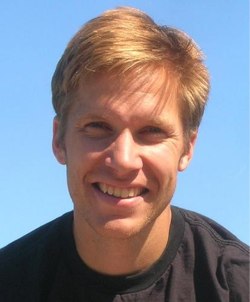
Andreas Olofsson, CEO of Adapteva

Back in October Adapteva wrapped up a successful Kickstarter campaign to build a Raspberry Pi-inspired $99 Linux supercomputer. Next month the company expects the first Parallela boards to be in production — just in time to show off at The Linux Foundation Collaboration Summit in San Francisco.

Here, CEO Andreas Olofsson gives us a preview of his talk at Collab, the benefits of parallel processing, and his company’s quest to make parallel computing available to the masses. Have a burning question he doesn’t answer here? Join us for a live Twitter chat with Andreas (@adapteva) Thursday, March 28 at 11 a.m. PST. Follow the conversation and submit questions with the hash tag #LiveLinuxQA.

Why is it so hard to achieve ubiquitous parallel processing?

Andreas Olofsson: Historically serial processing improved so quickly that in most applications there was no need for massively parallel processing. Unfortunately, serial processing performance has now hit a brick wall and the only practical path to scaling performance in the future is through parallel processing. To make parallel software applications ubiquitous, we will need to make parallel hardware accessible to all programmers, create much more productive parallel programming methods, and convert all serial programmers to parallel programmers. These are major challenges, but certainly not insurmountable.

What are the benefits of parallel computing that make it so essential for programmers?

Programmers that write scalable parallel applications should benefit from processor core scaling just like programmers in the past benefited from frequency scaling.

What is Parallella and where are you now with the project?

The Parallella is an open $99 credit card sized parallel computer. The goal of the project is to “make parallel computing accessible to everyone” so that we can speed up the adoption of parallel processing in the industry. We shipped Parallella prototype systems and open source SDKs in January and are now in the process of building up the first batch of final form factor boards.

What’s the secret to crowd-funding a project?

Launch a project that is important to a lot of people, become completely open, and never give up. 

Can you give us a sneak preview of your Collaboration Summit talk? What can attendees expect to hear?

I’ll talk about the Parallella computer and the incredible impact of open hardware platforms. With a little luck, I will also be able to show off the first Parallella boards coming off the manufacturing line.

More details on Andreas’s keynote, as well as the other keynote presentations and sessions can be found on The Linux Foundation Collaboration Summit website. If you’re not already attending, you can still request an invitation.

…read more
Source: FULL ARTICLE at Linux Foundation